
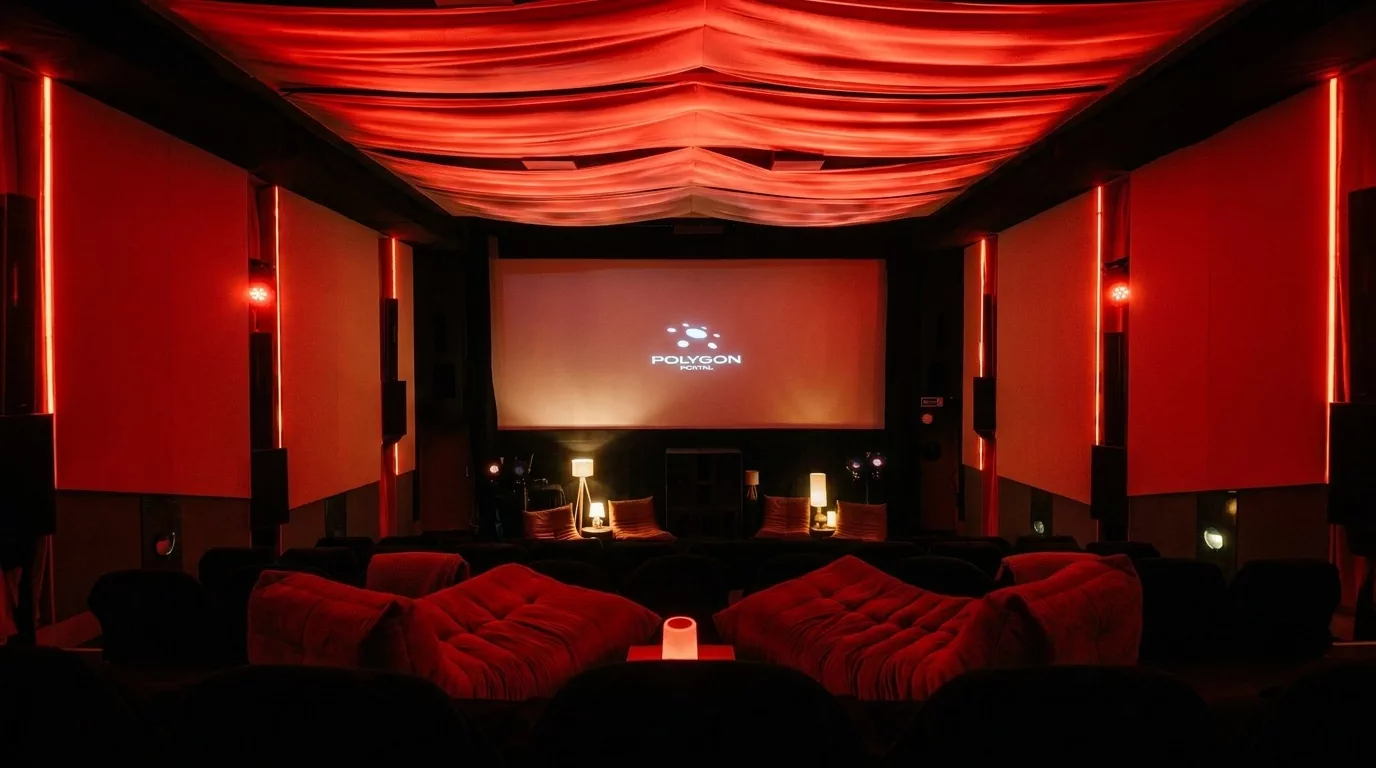
Polygon Portal is returning to Soho for a second season of immersive listening sessions between October and December 2026. The London room is built around a 17.1.10 L-Acoustics system, with 17 speakers around the audience, 10 overhead channels and a sub channel fed by four subs at the front. Polygon is using that setup for full-album playbacks, premieres, live appearances and artist-led events rather than operating as a conventional club or cinema.
The second season opens with a programme that moves freely between hip-hop, rock, electronic music and catalogue listening. De La Soul’s 3 Feet High and Rising is scheduled for 1 and 3 October, while Pink Floyd’s The Dark Side of the Moon runs across a long series of dates through October and November. Polygon’s wider season page also points to album launches, one-off performances and other 360° listening events continuing into December.
The room is designed around the playback format rather than a stage
Portal’s physical setup explains why the series feels different from a standard listening party. The audience sits inside the speaker field instead of facing a single front-of-house system. Polygon describes the intention in practical terms: drums can arrive from above, melodies can move behind the listener and vocals can sit in a different position from the rest of the arrangement. The point is not simply higher volume or wider stereo; the mix gains vertical and rear information that can be used as part of the arrangement.
That distinction matters for records originally built in stereo. A 360° presentation requires decisions about how existing stems, multitracks or remastering elements are mapped around the room. Some sessions can work from dedicated immersive masters; others depend on new spatial treatments. The result is therefore not automatically the same thing as hearing a familiar album through more speakers. The quality of the experience rests on how carefully the source material has been reconstructed for the system.

De La Soul puts sampling culture inside the spatial field
The De La Soul session is a good example of why catalogue material can become interesting in this format. 3 Feet High and Rising is densely assembled from samples, skits, voices and abrupt arrangement changes. Polygon’s event notes focus on the album’s layered construction, which makes it a natural candidate for separating elements across a multichannel room. The album is played in full, rather than reduced to a highlights package.
The format also encourages a different kind of concentration. Portal operates seated listening sessions with fixed start times and no late entry once playback has begun. That removes the constant movement of a club environment and makes the sound field itself the main event. For records with heavy use of collage, panning and contrasting sonic sources, the absence of visual staging can make production details more obvious.
Pink Floyd becomes a recurring anchor for the season
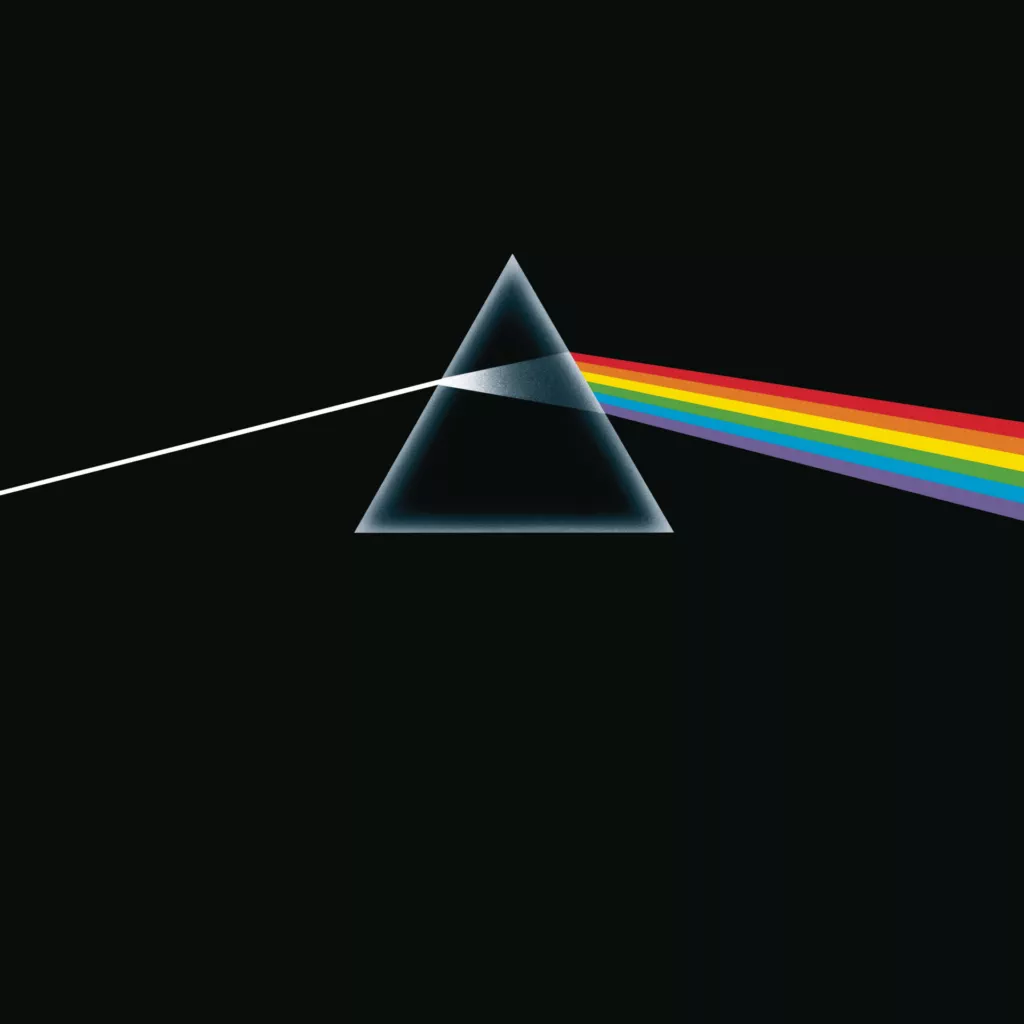
The Dark Side of the Moon is scheduled across a much larger block of dates, stretching from 3 October into mid-November. Several early sessions were already listed as sold out when Polygon published the second-season schedule. The album’s existing history with multichannel and immersive formats makes it a different proposition from the De La Soul programme: listeners are entering a record whose studio production has long been associated with spatial experimentation.
Polygon’s own event page keeps the concept simple. The record is played from beginning to end in 360° audio, with the venue’s speaker layout used to extend familiar details — heartbeat, voices, clocks, synthesizers and effects — across the room. The attraction is less about discovering a hidden album than about hearing a well-known production behave differently when the architecture of the mix becomes physical.
- Season: October–December 2026
- Location: Soho, London
- System: L-Acoustics 17.1.10
- Speaker layout: 17 surrounding channels, 10 overhead channels and four front subs on one sub channel
- Formats: album playbacks, live performances, launches, premieres and fan events
- EarthPercent contribution: £1 from every ticket sold
Portal sits between a hi-fi room, cinema and club sound system
The interesting part of Polygon Portal is how awkwardly it fits into existing venue categories. It has a bar and social space, but the listening room is not organised around drinking or dancing. It uses a cinema-like seating model, yet the technical focus is audio rather than projection. And although the sound system has the physical scale associated with club production, the programming often centres on attentive album playback.
That hybrid position reflects a wider shift in how immersive audio is being presented. Headphone spatial formats have made multichannel mixes more common, while Dolby Atmos rooms and specialist playback installations have pushed producers to think beyond stereo. Portal takes that change out of the personal-device environment and puts it into a small room where everyone hears the same speaker-based version.
For electronic music, that distinction is especially relevant. Club systems have always made space, bass and physical positioning part of the listening experience, but traditional left-right PA deployment does not provide the same object-based movement as a room with overhead and rear channels. Portal’s model gives spatial production a public playback context without forcing it into a festival-sized spectacle.
The second season expands the idea rather than changing the room
Season Two is therefore less about unveiling a new technical platform than about testing how much programming can be built around the existing one. Polygon is using the same listening-room concept for albums from very different production eras and genres. That breadth will be the more useful measure of whether the format has legs: a room like this needs enough material that genuinely benefits from spatial presentation, not simply a list of famous records with a surround badge attached.
The early programme suggests Polygon understands that challenge. The schedule mixes canonical catalogue titles with newer work, artist appearances and more specialised listening events. That keeps the focus on production and format rather than nostalgia alone. It also gives audiences several ways into the room: some will arrive because they know the album, others because they are curious about the technology.
The second season starts in October and continues through December. For now, the central proposition remains very concrete: a small Soho room, a fixed 17.1.10 speaker system and records rebuilt so the listener is placed inside the mix rather than in front of it.



THE CONVERSATION
Opinions, context and replies from the AT-DJ community.