
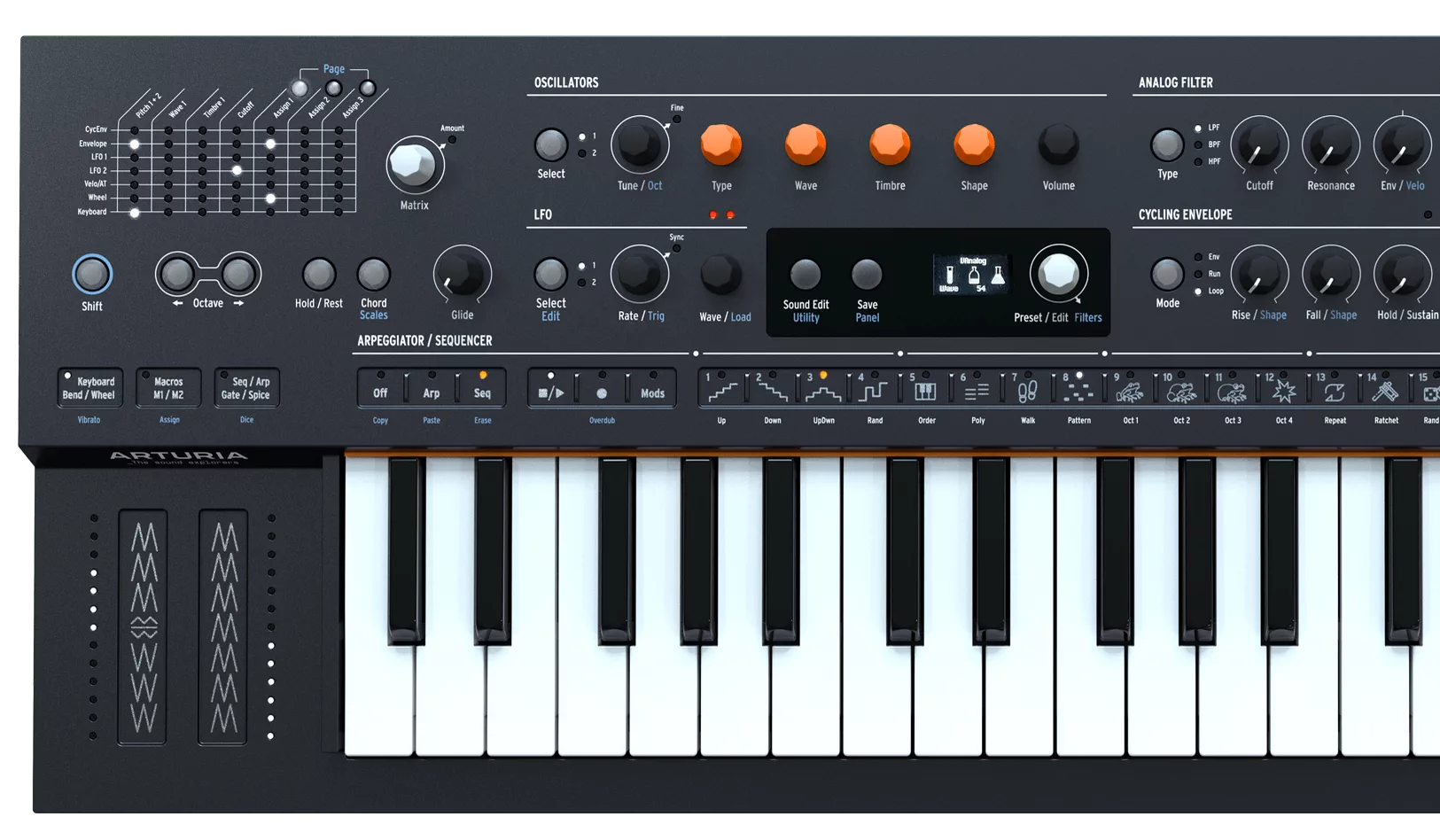
Arturia has released MiniFreak firmware 5.0, a free update that lets users import their own samples and wavetables into the hardware synthesizer and MiniFreak V. The update went live on 15 September and also adds a new Factory Bank with 23 presets built around the imported-content workflow. For a synth originally defined by a fixed collection of digital oscillator engines feeding analogue filters, the ability to bring external source material into those engines is a substantial extension of what the instrument can become.
The update does not turn MiniFreak into a conventional sampler. Imported audio is converted to a defined format and then used inside the synth’s existing sample-based engines, including granular processing. User wavetables enter through the Wavetable engine. That keeps the update tied to MiniFreak’s architecture: external material becomes raw input for the same modulation, filtering, sequencing and effects system already available on the instrument.
Samples become source material for the Freak engines
MiniFreak 5.0 accepts WAV, AIFF and FLAC files. Arturia specifies 12-bit, 32 kHz conversion with a maximum duration of six seconds per imported sample. Those limits make the intent clear. This is not aimed at long backing tracks or full phrase playback; the useful territory is one-shots, short textures, vocal fragments, percussion, field recordings and other material that can be reshaped through the synth.
Granular processing is particularly relevant here. MiniFreak already gained granular engines in an earlier firmware generation, but version 5.0 removes the restriction of working only with factory material. A producer can now create a source outside the instrument, import it and treat it as grains inside the hardware. Because the synthesis layer remains intact, the result can still be routed through modulation, the analogue filter stage and the three digital effects slots.
The workflow is shared with MiniFreak V. Arturia says the software handles conversion, organisation, auditioning and transfer of custom material to the hardware. That software-hardware link has always been one of MiniFreak’s more practical design choices: presets can move between the physical instrument and the virtual version, and 5.0 now extends that relationship to user content rather than keeping it at the level of parameter data.
User wavetables connect MiniFreak more directly with external libraries
Wavetable import follows a different specification. MiniFreak accepts mono wavetables at 24-bit resolution and 512 points, a format Arturia describes as broadly compatible. The company explicitly mentions material from Pigments, its larger software synthesizer, as one possible source. Producers with existing wavetable libraries can therefore bring a familiar set of shapes into MiniFreak instead of relying exclusively on the factory collection.
This is a useful expansion because wavetables respond well to MiniFreak’s performance controls. Position can be moved over time, macros can be assigned to larger timbral shifts, and the modulation matrix can connect LFOs, envelopes and other sources to the engine. A user-imported table therefore becomes more than a static replacement oscillator: it enters a system designed for movement.
- Release date: 15 September 2026
- Firmware: MiniFreak 5.0.0
- Sample formats: WAV, AIFF and FLAC
- Sample conversion: 12-bit / 32 kHz, up to six seconds
- User wavetables: mono, 24-bit, 512 points
- Factory content: 23 new presets
- Applies to: MiniFreak hardware and MiniFreak V
The hardware has grown without changing its basic control surface
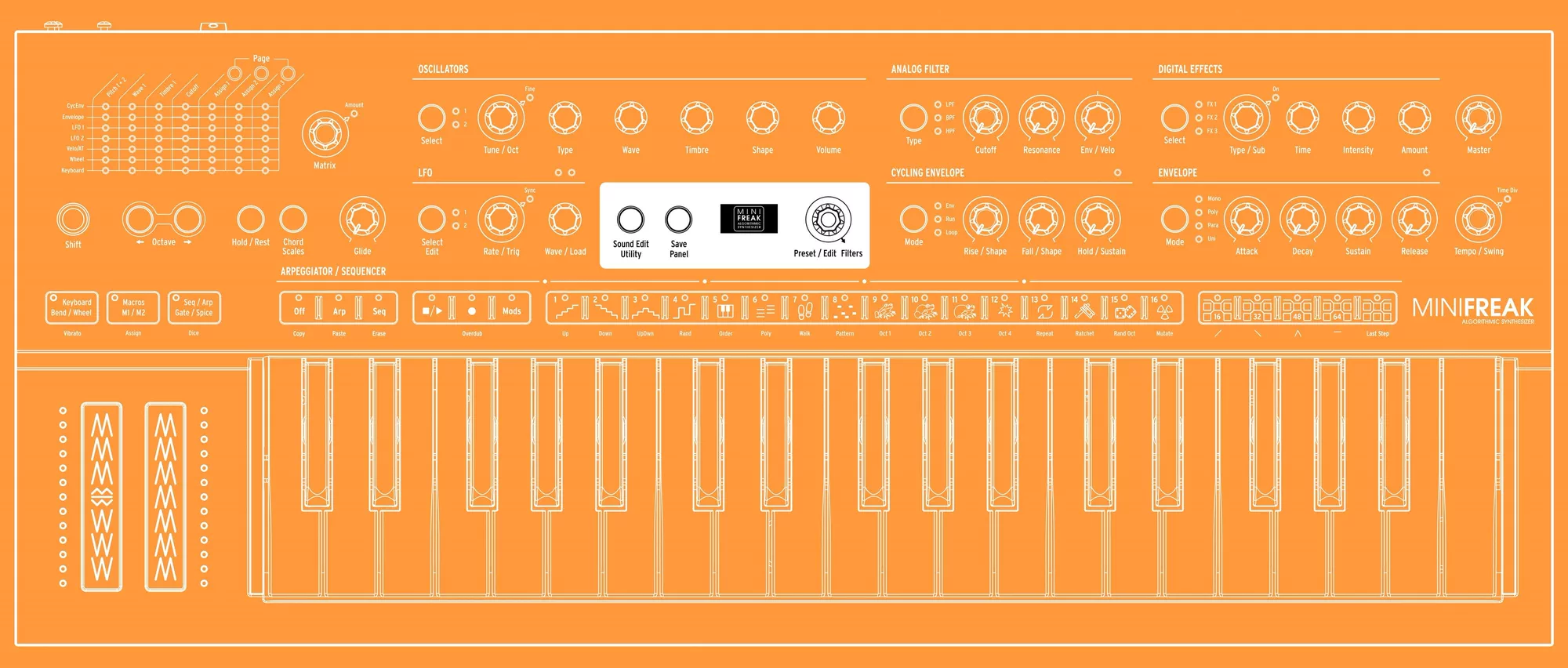
MiniFreak remains a six-voice hybrid polysynth with two digital sound engines, polyphonic analogue filters and VCAs, two LFOs per voice, a cycling envelope, a modulation matrix and a 64-step sequencer. The current engine list spans virtual analogue, FM, physical modelling, granular, wavetable, sampling and several algorithms derived from open-source or collaborative designs. Firmware updates have expanded that list while the front panel has stayed recognisably the same.
That continuity is one reason version 5.0 matters. Hardware instruments can gain features through software, but additional modes often remain variations on factory-defined algorithms. User import changes the ownership of the source layer. Two MiniFreak owners can now start from entirely different recordings and wavetable collections while using the same synthesis architecture to process them.
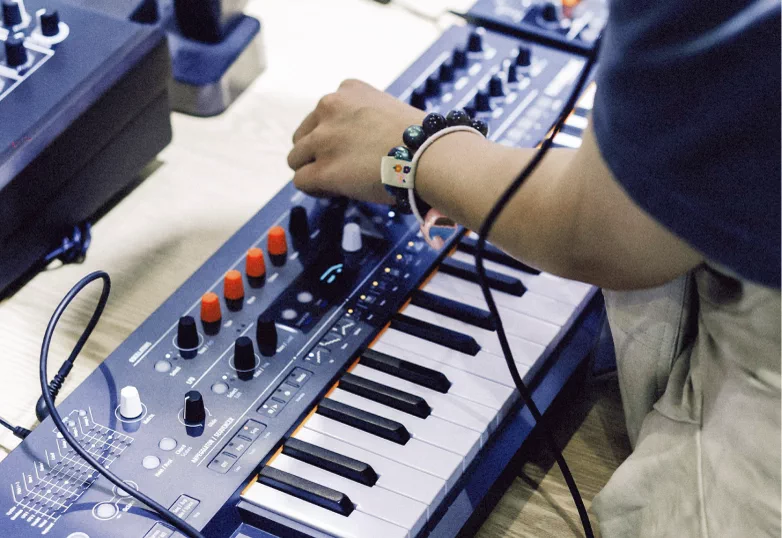
A free update that changes where sound design begins
Arturia has not altered the price or released a new hardware revision around the update. Firmware 5.0 is available for existing MiniFreak owners, and MiniFreak V 5.0.0.6875 is listed for macOS and Windows on the company’s download page. That keeps the new workflow accessible to the installed base rather than tying sample and wavetable import to a replacement model.
The technical limits will shape how producers use it. Six-second samples at 12-bit/32 kHz encourage compact source material, while 512-point mono wavetables keep that side of the system deliberately focused. Those constraints fit MiniFreak’s character better than an unrestricted file player would. The instrument remains a synthesizer first; version 5.0 simply lets the musician decide what raw material enters more of its engines.
The result is one of the more meaningful updates Arturia has delivered to MiniFreak since granular synthesis arrived. Instead of adding another closed bank of sounds, 5.0 gives users a path from their own recordings and libraries into the existing hardware. For anyone already using MiniFreak as a compact sound-design instrument rather than a preset keyboard, that changes the first step of the process.




THE CONVERSATION
Opinions, context and replies from the AT-DJ community.