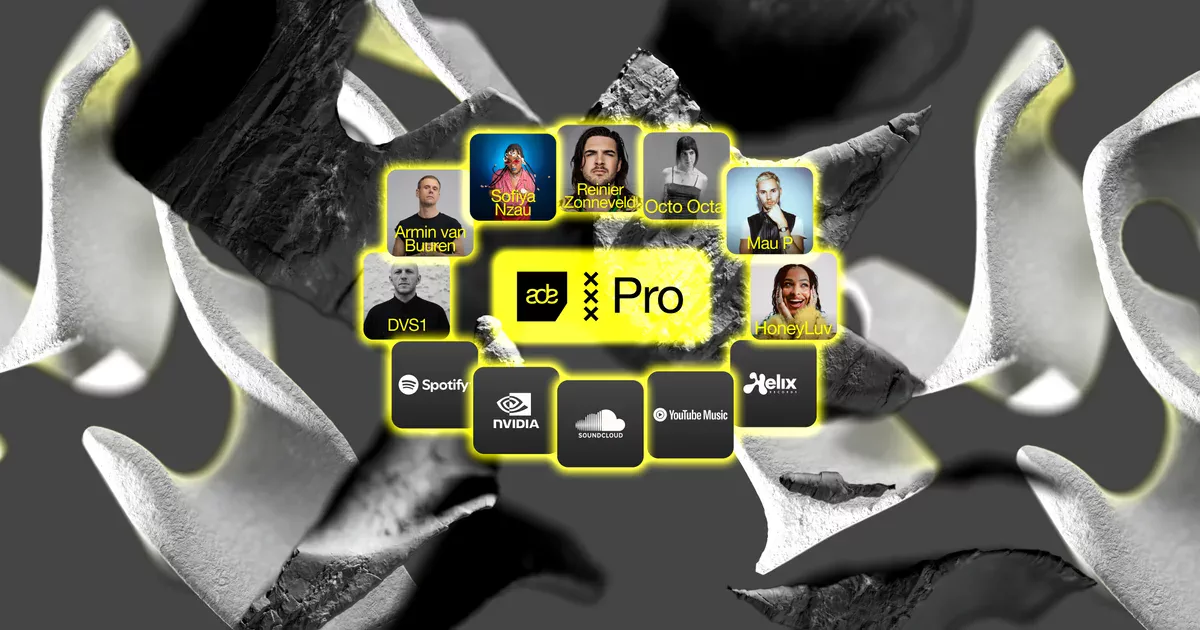
ADE Pro puts the technology industry on its 2026 agenda
Amsterdam Dance Event is placing music technology at the centre of its professional conference programme for 2026, with representatives from Google DeepMind, NVIDIA, YouTube Music, Splice, SoundCloud, Deezer, Image-Line and Believe among the announced participants. The move was set out in an official release on 19 October, immediately before ADE’s thirtieth-anniversary edition opens on 21 October. The announcement presents artificial intelligence, digital rights, creative tools and the infrastructure of music services as subjects for direct discussion between technology companies and the people who make and distribute music.
That is a significant framing decision for an event traditionally associated in the public imagination with DJs and club nights. ADE Pro serves professionals across the electronic music industry, from artists and independent labels to managers, rights specialists and platform operators. It has hosted discussions about commercial and creative change for years. The latest emphasis does not mean the conference has suddenly become a technology trade show; rather, it acknowledges that tools and distribution systems shape many decisions once made in separate parts of the industry.
According to ADE, the conference is increasingly designed as a meeting point for the companies that provide technical infrastructure and the music businesses that depend on it. The organiser describes a programme considering how artificial intelligence, ownership and investment interact. Those subjects are related, but they should not be confused. Software can assist creative processes; streaming platforms distribute recordings and account for listening; rights management seeks to establish who is entitled to payment; and investment decisions influence which businesses can operate at scale.
Google DeepMind and NVIDIA are among the prominent technology names on the announced programme. Their involvement makes machine learning and computing infrastructure relevant to the discussion, but it does not itself confirm the launch of a new consumer audio tool or a partnership with every record label represented at ADE. A speaker announcement provides evidence of participation in a conversation. It is not proof that an experimental technology has been adopted by the whole electronic music industry.
AI systems, studio software and the producer's workflow
Generative AI raises practical questions for producers using contemporary digital audio workstations. A system may be employed to suggest material, analyse sounds, assist editing or create entirely synthetic audio, depending on the product and its design. Those are different activities with different implications for originality, attribution and control. A journalist cannot assume that every AI feature operates in the same way or that all recorded material used to develop such systems was licensed on identical terms.
Image-Line, the company associated with FL Studio, is another relevant name in ADE’s announcement. A workstation is where producers organise recordings, patterns, audio processing and arrangements. Its development often affects the work of individual artists more directly than high-level industry announcements. Yet the appearance of a software company at a conference is not the same as a product-release statement. There is no justification for inventing a numbered FL Studio update, new plugin specification or availability date on the basis of its participation alone.
Splice brings a different part of the workflow into view. Sample libraries and related creator services sit between software development, licensing and practical composition. When a musician selects a sample, they need to understand the terms attached to its use and any restrictions on subsequent distribution. The same questions become more complicated when material is transformed or incorporated into a larger work. The ADE agenda can provide a forum for these conversations, but the official press release should not be presented as having already settled the legal questions.
Streaming platforms, credits and royalty reporting
Streaming platforms including SoundCloud, Deezer and YouTube Music connect artists with listeners through different products and business models. What they share is the need to identify recordings, maintain metadata and account for usage within their respective systems. Getting an artist name, recording identifier or credit wrong can make a release difficult to find and, in some circumstances, complicate payment reporting. The existence of a platform presentation does not establish that a particular payment or attribution problem has been fixed.
The relationship between data and royalties is especially relevant in electronic music. Tracks may circulate through DJ sets, online radio, streaming services and compilations before an artist becomes widely recognised. Different channels report usage in different ways. Accurate metadata can support attribution, but there are multiple parties involved in the chain, including distributors, collection societies and contractual rights holders. A technology company cannot unilaterally guarantee fair payment across every jurisdiction and platform.
Another question is how creators can determine what a digital service does with their work. Contracts, terms of service and disclosure mechanisms matter because a track can be stored, analysed, recommended or reused for distinct technical purposes. Discussions about digital ownership should distinguish possession of an audio file from copyright, neighbouring rights and contractual permissions. The words ownership and access are sometimes treated as interchangeable in promotional language; legally and commercially they are not.
Believe, also listed by ADE, adds the perspective of distribution and the recorded-music business. Digital distribution is not merely the final step of uploading a finished file. It involves release dates, territories, artwork, identifiers, pricing models where applicable and relationships with downstream platforms. For small electronic labels, errors in those processes can be just as consequential as choosing the wrong production software. The conference's relevance lies partly in bringing different parts of that chain into a common discussion.
Ownership, investment and the economics of digital music
The presence of venture capital and technology executives in the announced programme also deserves scrutiny. Growth funding may support new creative tools and services, but investment incentives can differ from artists' interests. A platform seeking rapid scale does not necessarily share every priority of an independent label with a small catalogue. Neither side should be caricatured: sustainable services need income, while creators need understandable costs and workable terms. ADE is describing a space to negotiate such relationships, not a completed consensus.
Some of the most useful questions for attendees will therefore be concrete. How can a creator check the provenance and licence of a sample? Who is responsible when platform metadata is wrong? What does a service promise to retain or remove after an account is closed? Which features are deployed today, and which exist only as demonstrations? A substantial report should distinguish these practical concerns from claims that technology will automatically solve every problem in creative work.
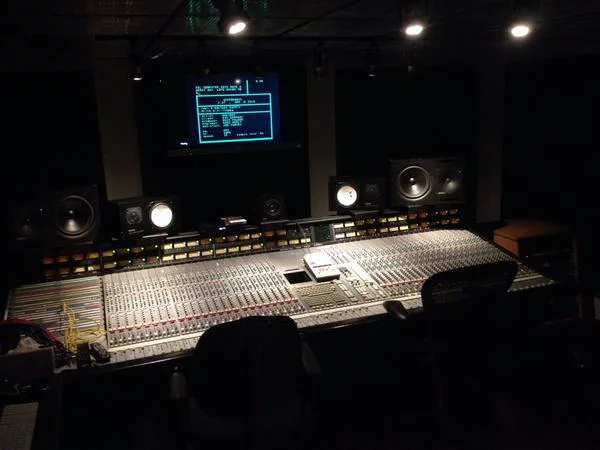
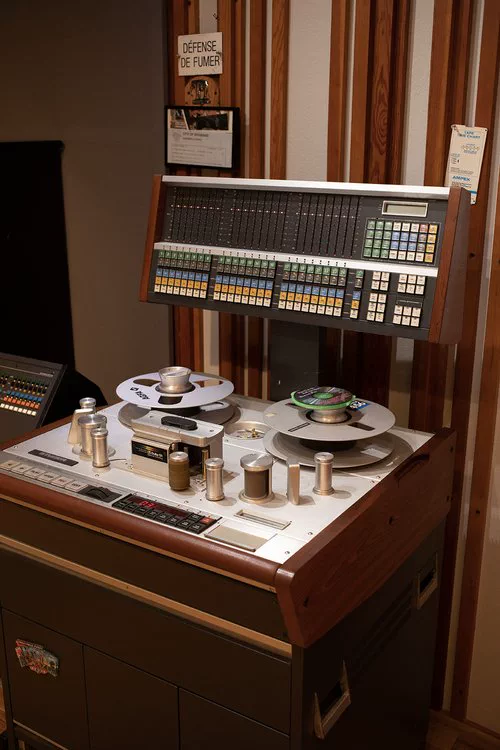
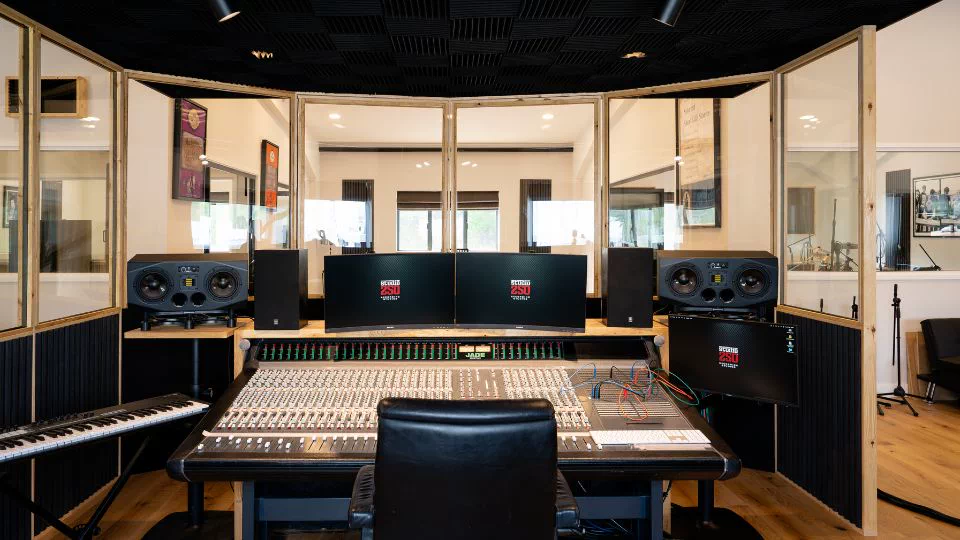
The photographs accompanying this article illustrate music production technology rather than any particular ADE panel. The main image shows a real digital workstation and console in a recording studio. Other images show control rooms and audio hardware at different facilities. They are not intended to represent NVIDIA products, DeepMind research labs or the conference stage. This distinction is important when an article addresses abstract systems that cannot be faithfully photographed using an unrelated stock image.
What technological change looks like inside a real studio
Equipment images also reveal a useful continuity. Even as producers adopt software-driven workflows, the tasks of recording, editing, monitoring and organising sound remain central. Modern DAWs can perform many operations previously carried out through dedicated hardware, but the technical process still requires decisions about gain, signal routing, processing and delivery. Artificial intelligence may change parts of that work; it does not eliminate the need to understand what a finished recording contains and which permissions attach to its components.
ADE’s thirtieth-anniversary programme runs from 21 to 25 October across the city, with the professional conference forming one part of a much larger gathering. The organiser has separately announced more than 3,600 artists for the festival programme. These figures provide context for the scale of the event, not a count of speakers attending the music-technology discussions. Readers should refer to individual ADE Pro sessions for precise times, moderators, venues and any programme changes.
Professional conferences often generate optimistic language about the future of an industry. That is understandable, but the news value for artists depends on whether the discussion produces clearer products, terms, rights mechanisms or ways to earn a living. The participation of Google DeepMind, NVIDIA, Image-Line, Splice and several leading music platforms makes ADE Pro a relevant place for those subjects to be raised. No announcement at this stage proves the participants have reached agreement on the unresolved issues.
For emerging producers, a sensible response is to follow the verified information while retaining an independent view of their tools and contracts. A new feature can be useful without being essential, and an impressive demonstration may still carry limitations in day-to-day studio work. Labels, meanwhile, can benefit from paying equal attention to metadata, licensing and platform terms. These are not glamorous topics, but they determine how recordings move through the digital music economy.
The 19 October announcement signals where ADE wants its professional conversation to go: closer interaction between the businesses that develop music technology and those whose recordings, performances and livelihoods depend on it. The 2026 conference will provide an opportunity to hear competing perspectives. Its lasting significance should be assessed through concrete outcomes rather than the prominence of the corporate names on the programme.

THE CONVERSATION
Opinions, context and replies from the AT-DJ community.