
A powerful club system, a compact DJ booth or the front section of a festival stage can keep the ears under sustained sound pressure for hours. That exposure accumulates. The World Health Organization links hearing risk to both level and duration: its safe-listening guidance gives around 40 hours per week at 80 dB, falling to roughly four hours at 90 dB. A single night in electronic music can absorb a sizeable part of that allowance.
Minuendo approaches the problem from a music-first angle. Its current range centres on two passive products, Adjustable earplugs and LIVE 17dB earplugs, both designed in Norway without batteries or electronics and built around a patented acoustic membrane. The company was founded in Oslo in 2018 after earlier research at SINTEF, with musicians, DJs and live-music audiences clearly central to the design brief.
Why clubbers and DJs need an exposure strategy
Noise-induced hearing damage often arrives gradually. Temporary ringing, a dull sensation after a show or reduced sensitivity the following morning can feel routine, yet repeated or prolonged high-level exposure can permanently damage sensory cells in the inner ear. WHO guidance specifically lists persistent tinnitus, difficulty following conversation and reduced high-frequency hearing as warning signs that should prompt professional advice.
For people around electronic music, exposure rarely comes from one source. Loud headphones before a night out, a warm-up near a stack, hours on the dancefloor, an after-party and another event the next day all contribute. Good practice combines distance from loudspeakers, quieter breaks, sensible headphone levels and properly fitted hearing protection. For DJs and musicians there is another requirement: protection needs to preserve enough spectral balance to make meaningful decisions about the music.
Adjustable: 7 to 25 dB without removing the plug
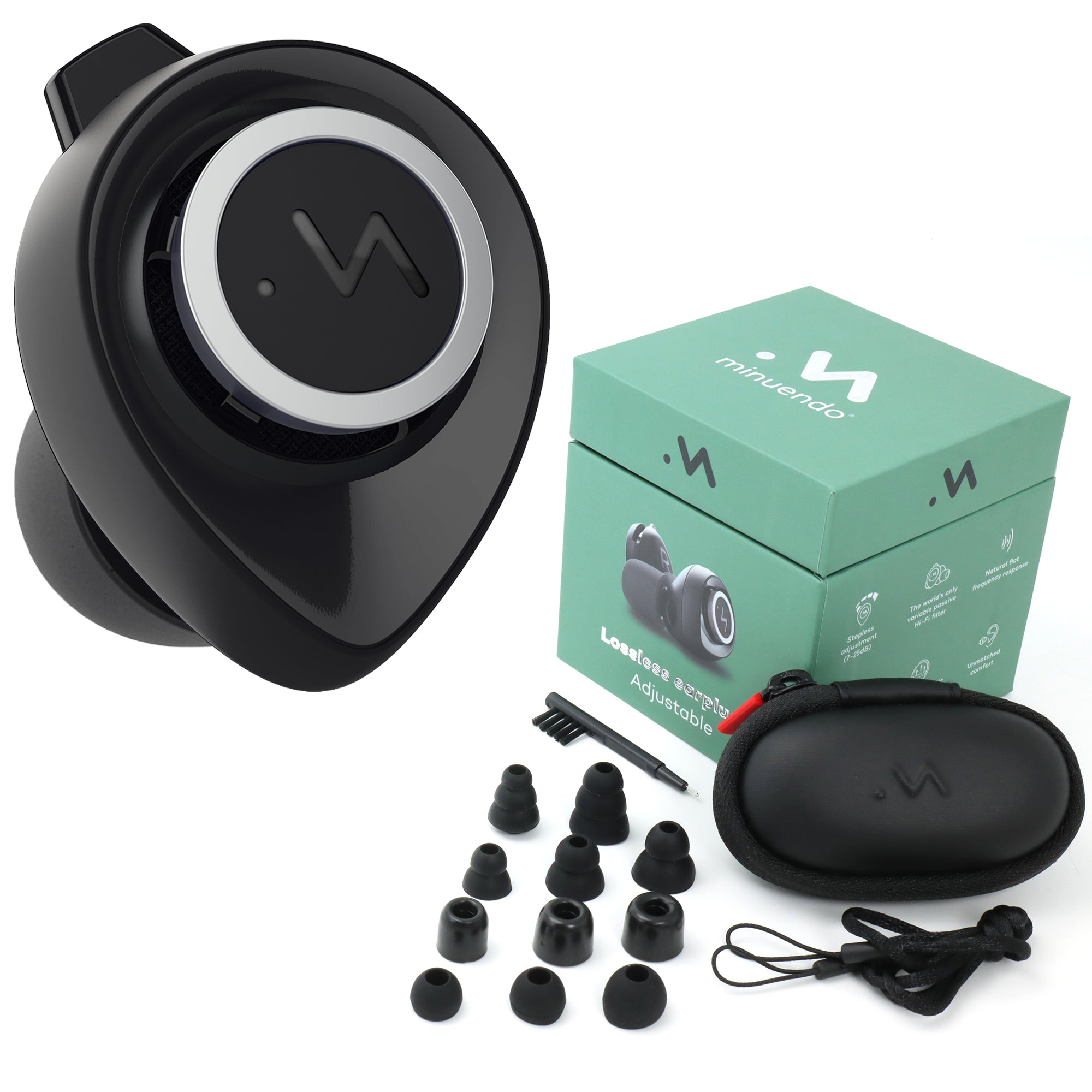
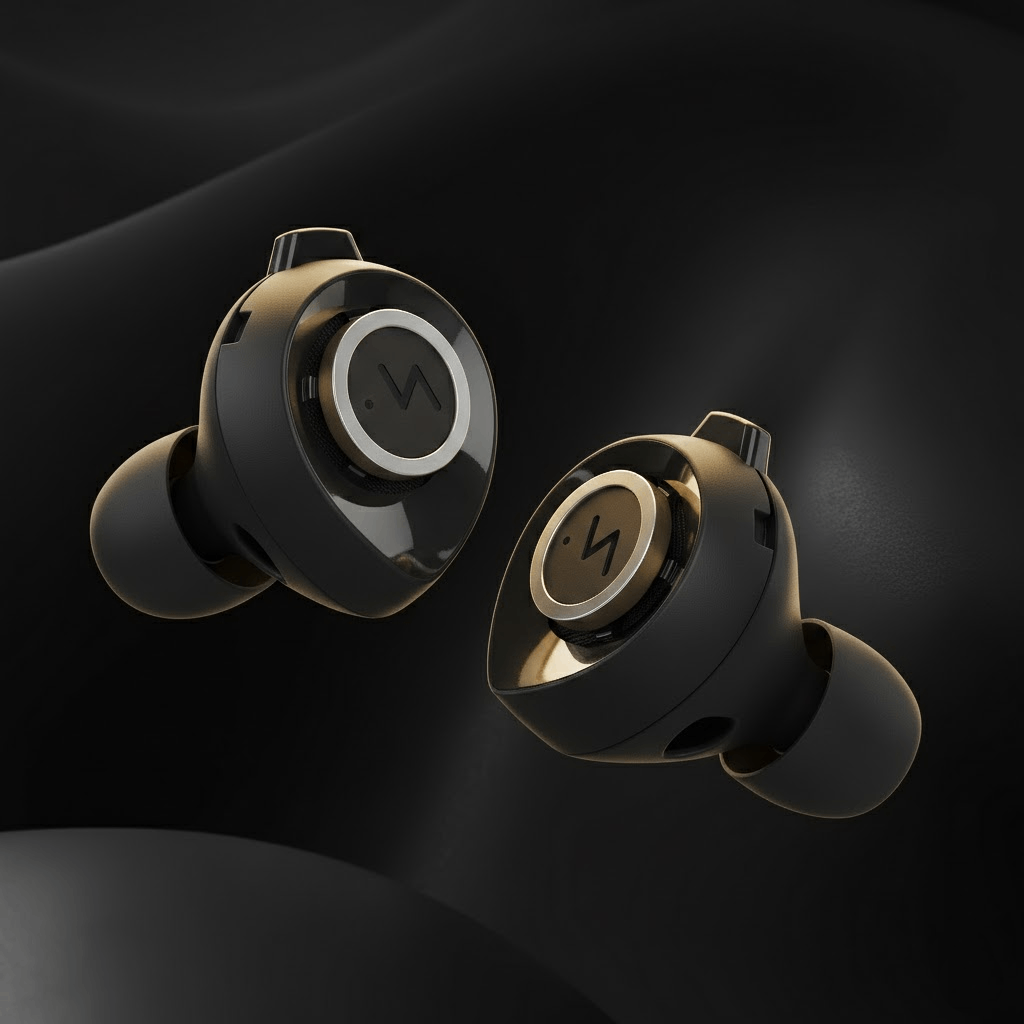
The flagship Adjustable is built around a simple practical advantage. A small mechanical control changes membrane tension and lets the user vary attenuation continuously between 7 and 25 dB while the earplug remains in place. A DJ can open the filter slightly for a booth conversation or handover, then increase protection when the system is running hard again. A musician can adapt it between rehearsal passages, soundcheck and performance.
Minuendo describes the design as a passive Hi-Fi filter with a flat frequency response. That claim needs sensible context: no earplug turns extreme exposure into a risk-free situation. What flatter attenuation can do is avoid the heavily muffled character familiar from basic foam plugs. For music use, preserving a recognisable relationship between lows, mids and highs matters because it helps with cueing, vocal intelligibility, instrument balance and simply staying connected to a set.
- Attenuation: continuously adjustable from 7 to 25 dB.
- System: passive and mechanical, with no batteries.
- Control: adjusted directly on each earplug.
- Ear tips: 11 pairs in different shapes and materials.
- Included accessories: case, leash and cleaning brush.
Fit is as important as the headline attenuation figure. A poor seal compromises protection. Minuendo includes eleven sets of foam and silicone tips to cover different ear-canal shapes and sizes. Comfort also has a practical consequence: a plug that becomes painful after an hour is likely to be removed, while one that shifts during movement may stop performing as intended.
LIVE 17dB: fixed attenuation for simpler use
The second model is LIVE 17dB. It uses the same broad acoustic-membrane approach but removes the variable mechanism, delivering a fixed 17 dB attenuation. It is sold in black and white. The appeal is straightforward: put the plugs in, establish a good seal and leave them alone for the duration of the show.
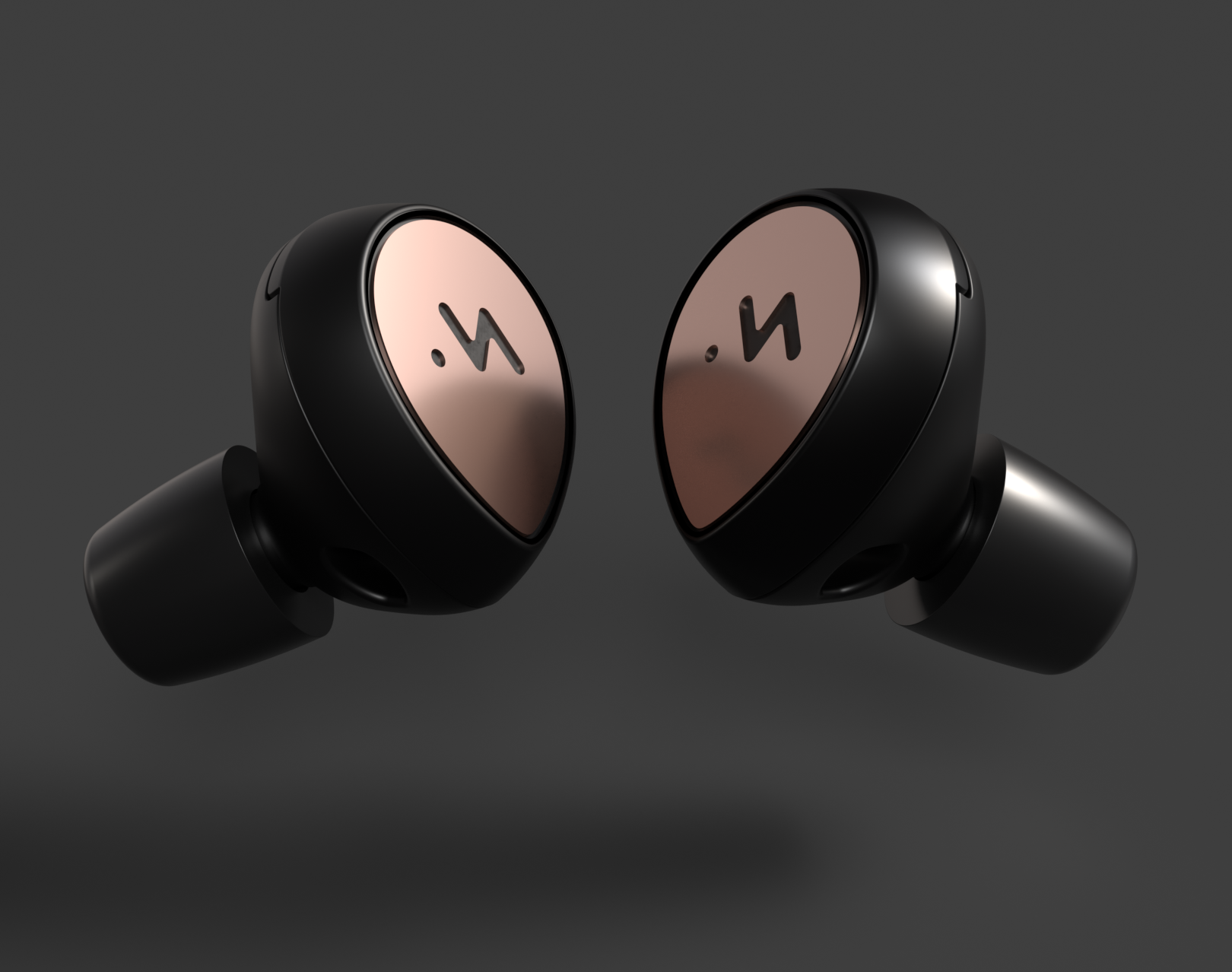
That makes LIVE particularly easy to understand for concerts, festivals and regular clubbing. Seventeen decibels of attenuation can make a substantial difference to exposure when a system is loud, although real-world protection still depends on fit, the actual level in the room and the total time spent there. Like Adjustable, LIVE comes with eleven sets of tips to make a reliable seal more achievable.
Attenuation changes exposure time, not the need for judgement
The relationship between decibels and time is where hearing advice becomes more concrete. Decibels are logarithmic, so apparently small numerical increases represent meaningful changes in sound energy. WHO safe-listening tables therefore cut permitted exposure sharply as level rises. Earplugs can reduce the dose reaching the ear, but they should not be treated as a licence to stand beside a high-output stack indefinitely.
WHO also recommends distance and frequent quiet breaks. At a twelve-hour festival, moving away from the main system and spending time in a genuinely calmer area is useful even when wearing plugs. The same applies in a DJ booth: lowering booth-monitor level between transitions and avoiding the habit of compensating with even louder headphones belongs to the same hearing-care routine.

Which Minuendo model suits which use?
For DJs, engineers and musicians who move between moderate and very loud situations, Adjustable has the clearest functional advantage: attenuation can be changed without taking the plugs out. For a clubber or concertgoer who wants a fixed level and minimal interaction, LIVE 17dB is simpler. In either case, the correct choice depends on real exposure and fit rather than appearance or chasing the highest attenuation number available.
There is also a price difference. At the time of writing, Minuendo’s official shop lists Adjustable at $179 and LIVE 17dB from $119, with pricing subject to market, tax and promotion changes. The company also sells a separate carry case with leash and cleaning brush, plus an eleven-pair ear-tip replacement pack. Those accessories are mundane, but they matter if hearing protection is meant to live permanently in a record bag, jacket or touring case.
If persistent tinnitus, reduced high-frequency hearing or difficulty following conversations appears after sound exposure, WHO guidance recommends contacting a hearing professional. Earplugs are preventative equipment, not a substitute for clinical assessment.
Protecting hearing protects a long relationship with music
Electronic music spends endless time discussing systems, mastering, converters, monitors and detail. Every one of those decisions eventually reaches the same endpoint: the listener’s ears. Anyone planning to stay around clubs and live music for decades benefits from treating hearing as a finite resource. Protection, sensible positioning and quiet recovery periods are unglamorous habits, but they support years of listening and performing.
Minuendo’s strongest idea is therefore practical rather than theatrical: remove some of the sonic penalty that makes people abandon earplugs. Adjustable adds flexibility; LIVE 17dB makes the routine simple. Neither removes the need to manage exposure, yet both fit a healthier club culture in which leaving the venue with functioning ears is part of a good night, not an optional extra.


THE CONVERSATION
Opinions, context and replies from the AT-DJ community.