

Steve Reich is the focus of a new immersive series at Oxford’s Schwarzman Centre for the Humanities, where three of his best-known bodies of work are being presented in 360° spatial audio. Phase | Pattern | Pulse runs from 25 September to 11 October and centres on Drumming, Music for 18 Musicians and a third programme built around Reich’s sextet writing. The project was created to coincide with the composer’s 90th birthday year.
The format is unusual because these are not conventional concerts. Loss﹥﹤Gain, working with the Colin Currie Group and Sound Intermedia, have taken recorded performances and redistributed their internal relationships through a full spatial system in the Schwarzman Centre’s Black Box. The musicians are therefore not performing live in the room during these sessions. The compositional process itself becomes the object of the listening experience: pulses, repeated figures, harmonic changes and percussion layers can move around the audience rather than arriving from a single frontal stage.
Reich’s structures are unusually suited to spatial listening
Reich’s music has always depended on the listener noticing change inside repetition. In Drumming, rhythmic cells accumulate and shift over long spans; in Music for 18 Musicians, pulses and harmonic cycles pass between voices, winds, strings, pianos and mallet instruments; the sextet works concentrate similar processes into denser instrumental groups. None of that requires surround sound to function, but spatial separation can make relationships that normally compete inside a stereo field easier to follow.
That is the conceptual strength of Phase | Pattern | Pulse. It does not treat spatial audio as a decorative effect added to an existing master. The Schwarzman Centre describes the programmes as an exploded view of Reich’s structures. For electronic producers and club listeners, the approach has an obvious parallel with multichannel sound design: placement becomes another dimension of arrangement, and repetition can be made legible through movement as much as through timbre or level.

Three programmes break down different parts of Reich’s language
The Drumming programme takes one of Reich’s most rhythmically rigorous works and puts the emphasis on phase, pulse and repetition. Written in the early 1970s, the piece develops from limited rhythmic material over a long duration, with gradual substitutions and timbral changes doing the structural work. In this version, the spatial design allows patterns to move through the room while the process remains audible over time.
Music for 18 Musicians approaches movement differently. The 1976 work is built from a sequence of harmonic sections linked by a persistent pulse. Its characteristic sound comes from the interaction of pianos, marimbas, xylophones, clarinets, strings and voices, with different players taking responsibility for changes in timing and harmony. The Oxford presentation uses that interdependence as material for the surround field, positioning lines so that the listener can follow how one instrumental layer hands momentum to another.
The sextet programme condenses Reich’s methods further. The centre describes it around resonance, repetition and pulse, drawing attention to the way tightly grouped instrumental forces can produce a much larger apparent sound world. Across the three programmes, the project therefore moves from percussion-led process to one of minimalism’s most famous ensemble works and then into denser chamber-scale writing.
- Dates: 25 September–11 October 2026
- Venue: Black Box, Schwarzman Centre for the Humanities, Oxford
- Programmes: Drumming, Music for 18 Musicians and The Sextets
- Spatial audio: Loss﹥﹤Gain with Colin Currie Group and Sound Intermedia
- Lighting: Ed Warren
- Format: recorded immersive presentations rather than live Colin Currie Group performances
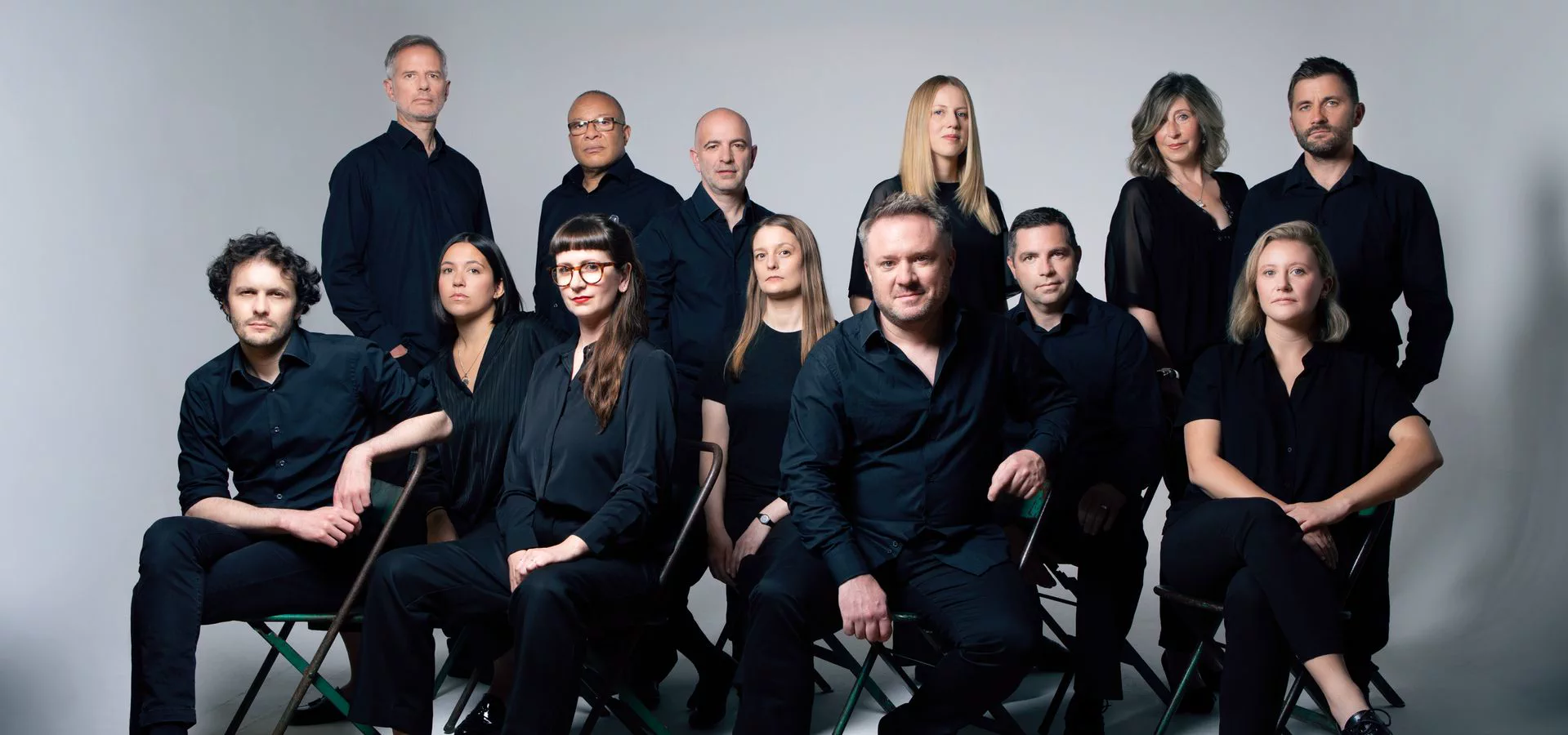
Colin Currie Group supplies the performance material
The Colin Currie Group is central to the project because its recordings provide the musical performances on which the spatial designs are built. The ensemble was founded around Reich’s repertoire and has maintained a close relationship with his music, particularly the percussion-heavy works that demand exact control over pulse without flattening the small differences that make repetition feel alive.
That distinction matters in a spatial setting. An immersive mix can separate every part cleanly and still fail if the performance underneath feels mechanical. Reich’s scores rely on ensemble precision, but they also rely on breath, attack, decay and the slight physical character of repeated acoustic gestures. The Colin Currie Group’s role keeps the project grounded in played sound rather than turning the compositions into reconstructed electronic objects.
A useful test case for immersive audio beyond spectacle
Spatial audio is now common in product launches, headphone ecosystems and large-scale live production, but the musical case for it varies widely. Phase | Pattern | Pulse is interesting because Reich’s work gives the format something specific to reveal. The listener is already being asked to track pattern, phase and gradual transformation; a three-dimensional mix can assign those processes physical direction without needing to invent a separate visual narrative.
The sessions are scheduled repeatedly across the run, including relaxed performances on selected dates. That repetition also changes the practical relationship to the work. Rather than one headline concert, the project behaves more like an installation programme: listeners choose a particular composition, enter the Black Box for roughly an hour and hear a version designed specifically for that room and playback system.
For a composer whose influence reaches far beyond contemporary classical music into techno, ambient, looping and process-based electronic production, the setup feels particularly apt. The strongest connection is not that Reich’s music suddenly becomes club music when placed in surround. It is that many of the ideas producers use every day — repetition, phasing, additive structure, pulse and gradual parameter change — can be heard here with unusually clear spatial separation.



THE CONVERSATION
Opinions, context and replies from the AT-DJ community.