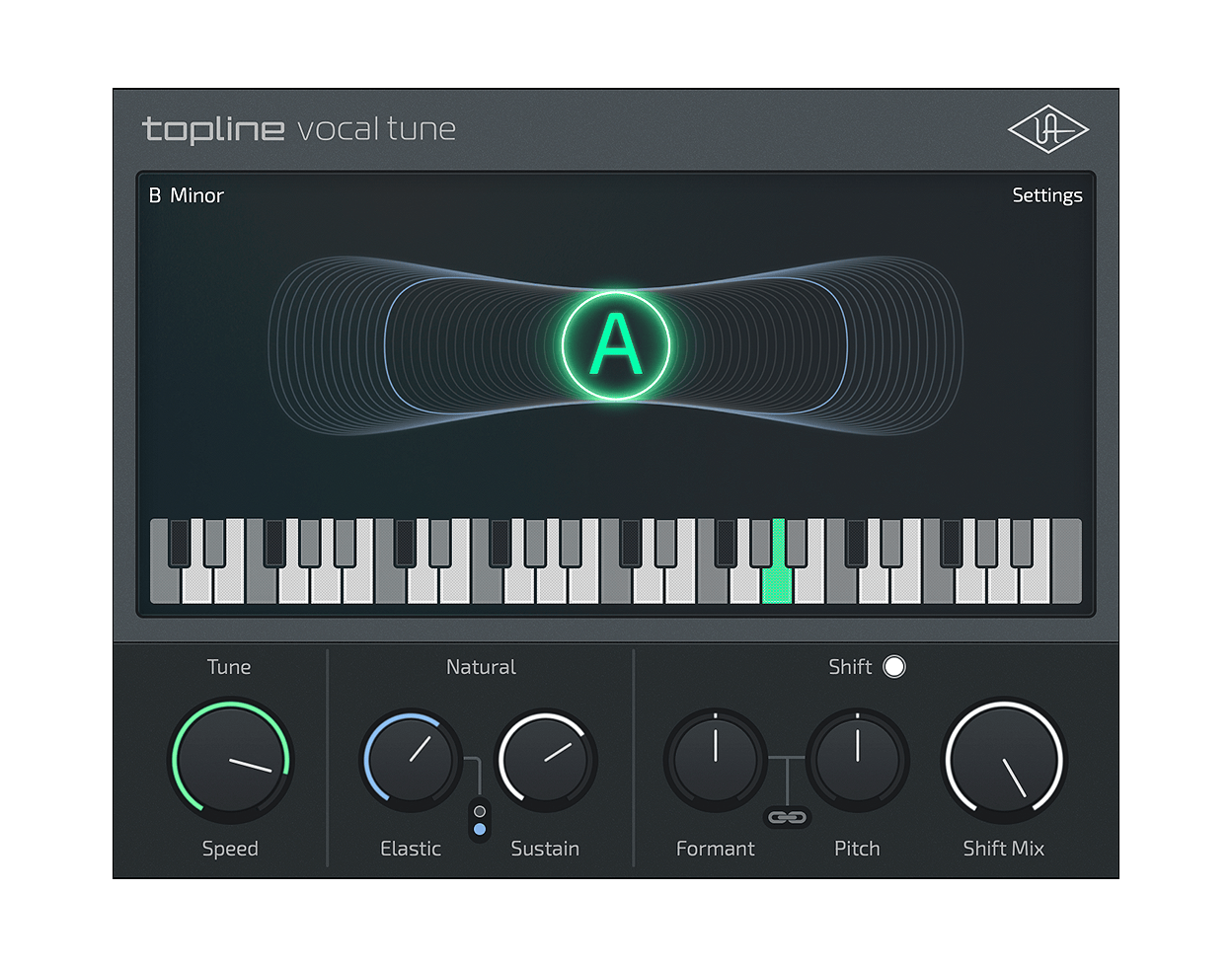
Real-time tuning plug-ins live or die by how quickly they let you make sensible decisions. Topline Vocal Tune keeps the interface deliberately small: choose the key, set correction speed, then use Elastic and Sustain controls to decide how much natural movement stays in the performance. That is a much easier mental model than a page packed with correction curves and technical parameters.
Universal Audio has also built the plug-in around monitoring. The native version can run directly in a DAW, while Apollo owners get a DSP version intended for very low-latency tracking and live use. In LUNA, settings can move between native and DSP versions. That is particularly useful when a vocal effect forms part of the performance rather than something added after recording.
The correction section can move from subtle support to the hard-edged tuning associated with contemporary rap, pop and electronic vocals. Elastic and Sustain are useful because they address different parts of a phrase instead of reducing everything to one speed control. The result is a straightforward way to keep slides and vibrato present without letting longer notes drift.
Shift mode handles the more creative side. Pitch and formant controls can reshape a voice well beyond corrective tuning, and MIDI input allows pitch to be played from a keyboard. That pushes Topline into sound-design territory without turning the interface into a separate instrument.
The missing piece is graphical editing. Anyone who wants to redraw individual notes, adjust transitions visually or perform forensic post-production will need another tool. Topline is designed around real-time decisions. Within that remit, its clarity is a real advantage. It is quick enough for writing sessions and flexible enough to survive into the final mix.