
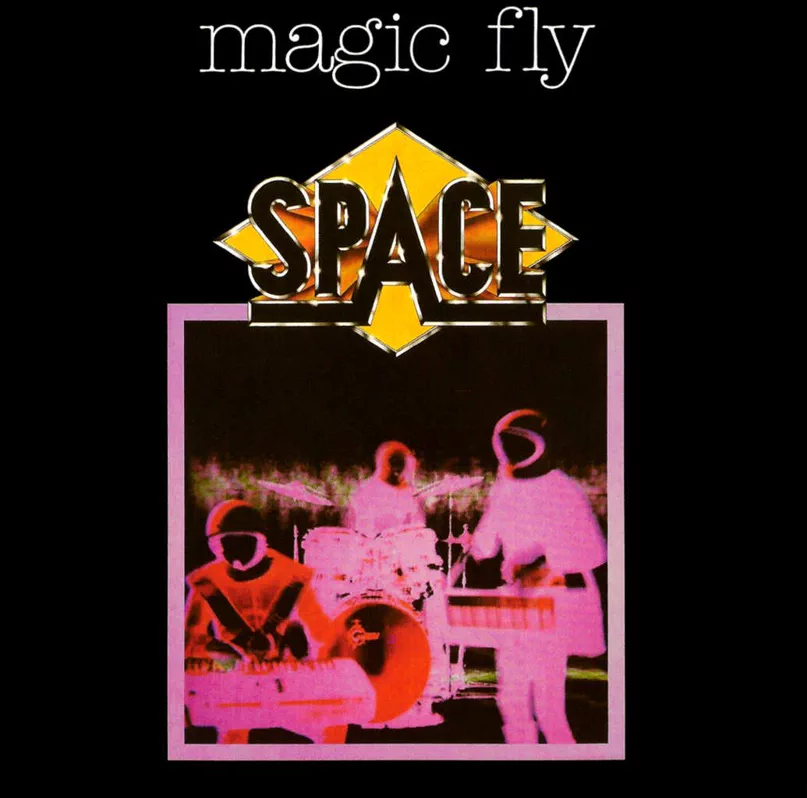
French electronic group Space are returning to their formative 1977–78 catalogue with The Art of Space Disco 1977–1978, a remastered collection due on 16 October through Because Music. The release pulls material from the period that produced Magic Fly, Deliverance and Just Blue, then places it alongside a run of new edits and remixes commissioned during 2026.
The project arrives in two substantially different physical editions. A crystal-clear LP condenses the selection to ten tracks and includes exclusive edits of “Carry On, Turn Me On”, “My Love Is Music”, “Deliverance” and “Running In The City”. The double CD expands the archive with “Symphony” and “Velvet Rape” and adds eight 2026 remixes by The Toxic Avenger, Domenico Torti, Dimitri From Paris, DJ Deep, Alex Gopher, Antoine Bourachot, The Reflex and Joe Smooth. Alex Gopher has remastered the complete set.
The compilation concentrates on Space’s first two years
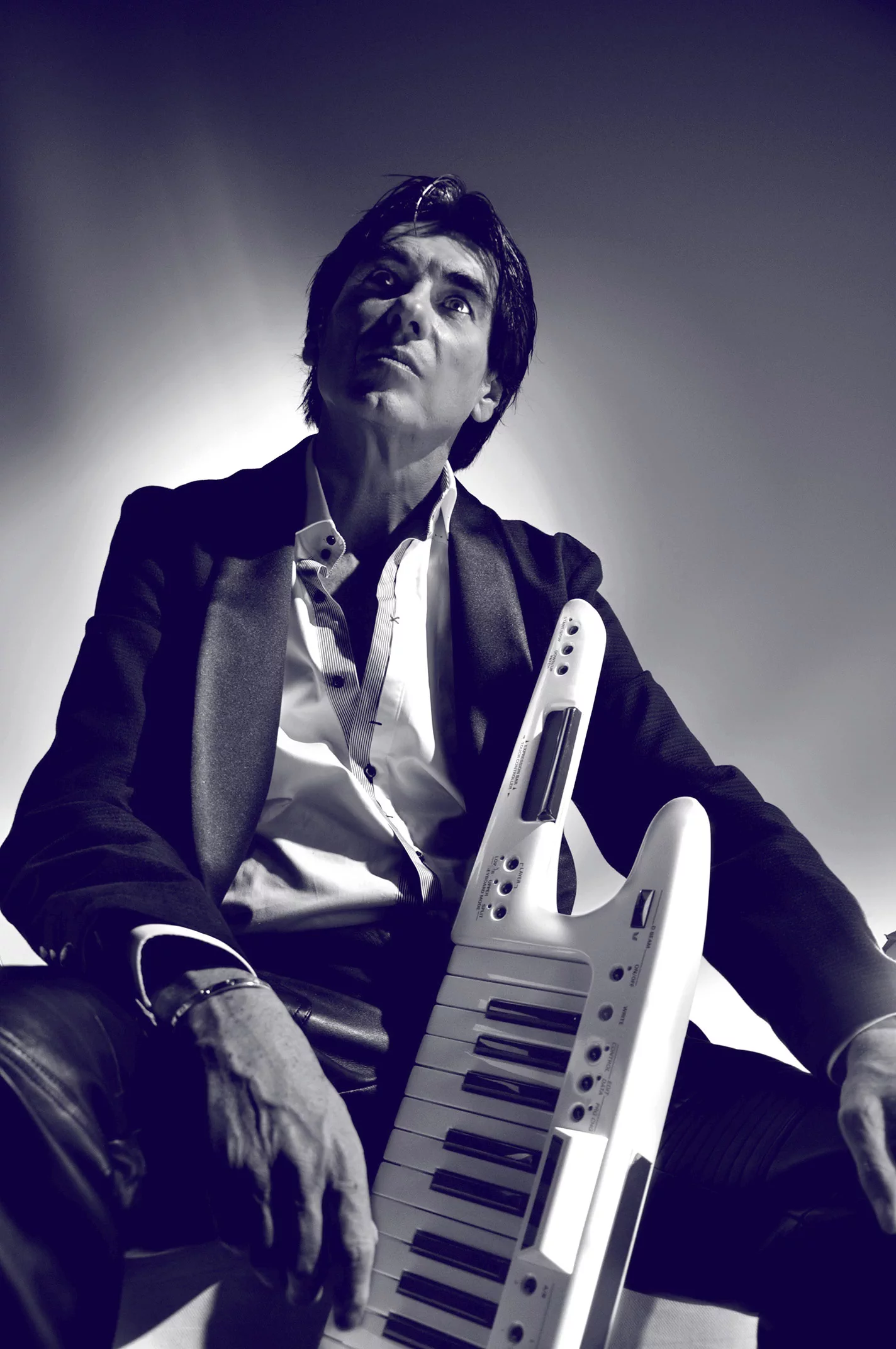
Space were formed in 1977 by Didier Marouani, and the title of the new collection is deliberately narrow. It stops at 1978 rather than attempting to summarise the group’s entire catalogue, keeping the focus on the three albums that established their early identity. The official Bandcamp page describes those records as the core of a two-year period in which synthesizer-led disco, melodic writing and increasingly broad orchestration developed at unusual speed.
Magic Fly came first in 1977. Its seven-track sequence includes “Fasten Seat Belt”, “Ballad For Space Lovers”, “Tango In Space”, “Flying Nightmare”, “Magic Fly”, “Velvet Rape” and “Carry On, Turn Me On”. The title track supplied the group’s defining melodic figure, but the album around it already moved between midtempo electronic passages, disco rhythm sections and longer pieces that gave synthesizers more room than a conventional single format.
Magic Fly remains the obvious entry point, but the new set widens the frame
“Magic Fly” remains the track most closely associated with Space, and Because Music has already used 2026 to place it back into contemporary club circulation. A March remix package paired the original with new versions by The Toxic Avenger and Domenico Torti. Those remixes are carried onto the double-CD edition of The Art of Space Disco, where they sit beside original catalogue material rather than replacing it.
The wider tracklist gives equal weight to pieces such as “Tango In Space”, “Fasten Seat Belt”, “Ballad For Space Lovers” and “Carry On, Turn Me On”. That matters because Space’s early catalogue worked across several tempos and production approaches. The slower material often leaves the synthesizer lines exposed, while the longer disco cuts make room for bass, percussion and vocal elements. The new compilation can therefore show how the group’s electronic identity functioned beyond a single signature melody.
The 2026 remix programme links the archive back to club culture
Because Music has spent the year commissioning new versions of several Space tracks. In May, Dimitri From Paris and DJ Deep reworked “Carry On, Turn Me On” as a short remix, an extended three-part version and a club dub. The official release also retained the 1977 original, making the relationship between the source and the new treatment explicit.
The double CD expands that idea across eight remixes. Alex Gopher and Antoine Bourachot take on “Tango In Space”; The Reflex revisits “My Love Is Music”; Joe Smooth and Mr. Root also work with that track; Domenico Torti contributes to “Magic Fly” and “Final Signal”; The Toxic Avenger provides another “Magic Fly” version; and Dimitri From Paris with DJ Deep represent the longer club end of the set. These versions had not previously appeared on physical media, according to the official release notes.
- Release: The Art of Space Disco 1977–1978
- Date: 16 October 2026
- Label: Because Music
- Vinyl: crystal-clear LP with four exclusive edits
- CD: double CD with two additional archive tracks and eight 2026 remixes
- Remastering: Alex Gopher
- Liner notes: Jean-Yves Leloup
Just Blue shows how quickly the arrangements expanded
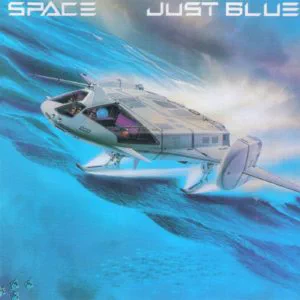
By Just Blue, the instrumental scale had already changed. The 1978 album includes “Just Blue”, “Final Signal”, “Secret Dreams”, “Symphony”, “Save Your Love For Me”, “Blue Tears” and “My Love Is Music”. Space’s official catalogue describes the record as more melancholic and more broadly orchestrated than the debut, a useful distinction when looking at the new compilation because several of those tracks are used to balance the harder disco selections from the earlier records.
The title track and “My Love Is Music” both appear on the main retrospective, while “Symphony” is reserved for the expanded CD. The vinyl edit of “My Love Is Music” is one of four versions prepared specifically for the LP. That format choice gives the record a distinct running order instead of treating vinyl as a shortened copy of the CD.
A remastering project with different goals for vinyl and CD
The physical split is one of the strongest editorial choices in the project. The LP is built as a concise ten-track object with four unique edits, while the double CD functions more like an archive plus a remix appendix. Listeners who want the core 1977–78 material get a shorter sequence on vinyl; the CD adds songs and a second disc that documents how contemporary producers have approached Space during 2026.
Alex Gopher’s remastering sits underneath both versions. Because Music has not presented the set as a reconstruction of the original mixes. The source tracks remain recognisable as period productions, with the mastering intended to bring the catalogue together at a consistent level. That separation between restoration and remixing is useful: the historical recordings stay intact, while the 2026 reinterpretations are clearly identified as a separate layer.
Space’s early catalogue still sits comfortably inside modern electronic listening
The reason this material keeps attracting remixers is partly structural. Tracks like “Magic Fly” are built from strong, economical motifs that survive changes in drums, tempo and arrangement. The sound palette is unmistakably tied to late-1970s synthesizer technology, but the writing leaves enough space for later producers to change the rhythmic context without losing the central idea.
That has made Space a recurring reference point across disco, house, leftfield electronic music and retro-futurist production. The new collection does not need to manufacture a modern relevance around that history; the 2026 remix programme provides a practical example of the catalogue continuing to circulate among working DJs and producers.
The Art of Space Disco 1977–1978 arrives on 16 October. The vinyl and double-CD editions share the same early catalogue but serve different purposes, with one built around edited sequencing and the other preserving a broader archive alongside the year’s remixes. Nearly five decades after Magic Fly, Space’s first two years are being treated as a compact body of electronic work rather than a single-hit footnote.




THE CONVERSATION
Opinions, context and replies from the AT-DJ community.