Supersaws are easy to describe and surprisingly easy to make boring. Stack enough detuned oscillators, spread them wide and add reverb: the basic recipe has been around for decades. Native Instruments’ SuperStarSaw, co-created with A. G. Cook, is interesting because it treats that familiar sound as a playable system rather than a nostalgia button.
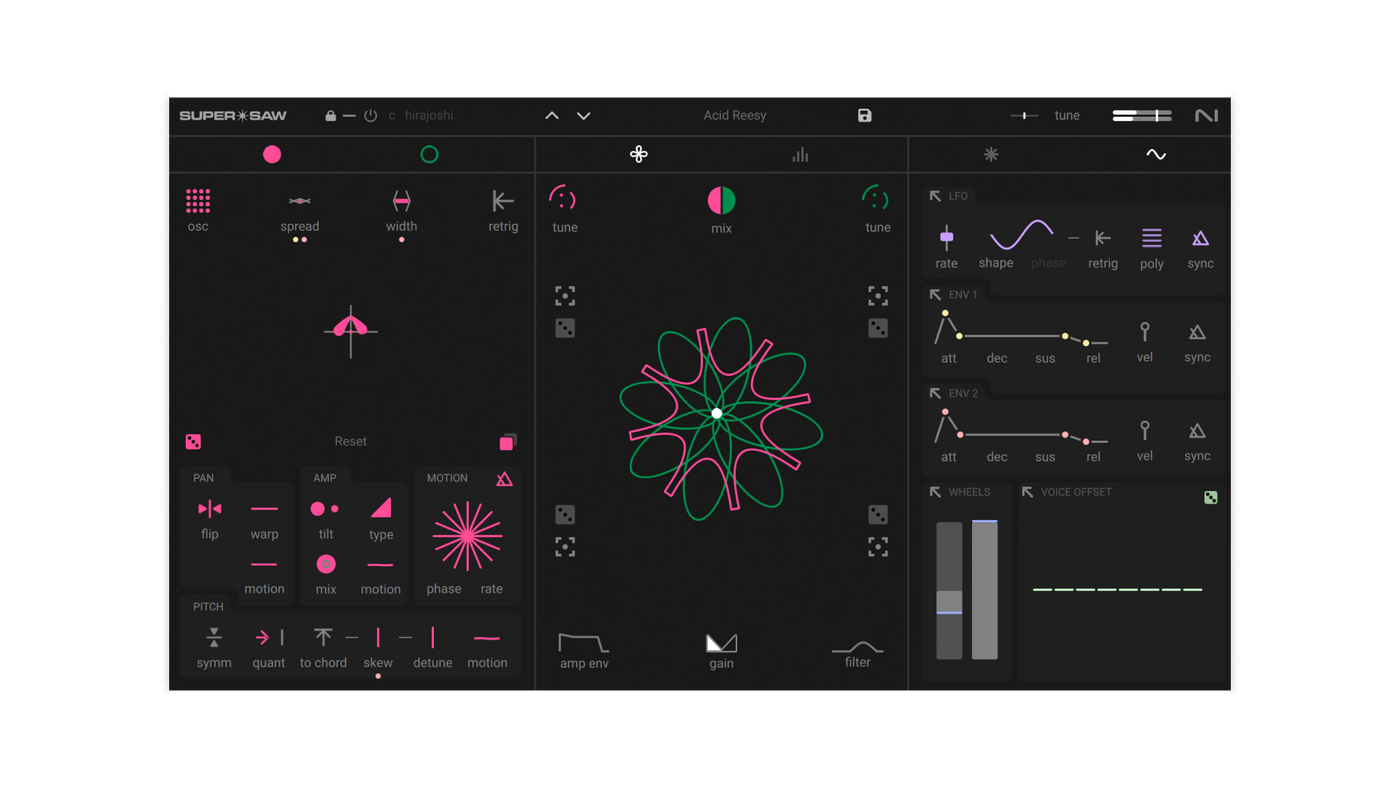
The engine is built around two Swarms. Each uses an eight-voice oscillator structure and can layer up to 16 additional saws, giving the instrument enough density for the obvious huge chords and leads. Voice offset, detune, spread and glide then push those stacks away from a single static block. The Morpher is the quickest route through the instrument: an XY control that moves between sound states and makes large timbral changes without forcing you through layers of menus.
That immediacy is the main strength. SuperStarSaw can produce very polished euphoric material, but it also handles harsher dissonance, smeared transitions and unstable pitch movement. Chorus, delay and reverb are built in, so finished-feeling patches arrive quickly. There is still enough envelope and modulation control to stop the instrument feeling locked to factory programming.
The 235 presets cover a useful range of starting points and make the intended audience obvious. Trance, hyperpop, modern rave and glossy club pop sit comfortably here. Producers making stripped-back techno or acoustic-heavy material will probably use it less often. That is not a flaw in the engine; it is simply the consequence of designing around one family of waveforms.
The price is reasonable for a focused instrument, especially if its core sound appears regularly in your work. The bigger question is overlap. Many flagship synths can already build complex supersaws. SuperStarSaw earns its place by making those sounds faster to shape and much easier to perform.