Physical modelling can be an intimidating phrase because it suggests a lot of equations before it suggests music. Atoms succeeds by hiding most of that complexity. The engine simulates interconnected masses and springs, then excites the system with a virtual bowing action. The result is not a model of one recognisable acoustic instrument. It behaves more like an imaginary resonant object with properties that can be reshaped in real time.
That matters because the sound does not begin with a standard saw, square or wavetable. Even relatively simple patches tend to carry movement and small instabilities. BABY Audio describes the behaviour as organic, and that is a fair way to frame it: the model does not produce exactly the same event every time in the way a static sample might.
For electronic producers, this gives Atoms a useful role. It can create plucks that sit somewhere between string, membrane and synthetic percussion; pads that feel bowed rather than filtered; brittle metallic tones; and evolving layers that do not immediately identify themselves as a familiar synth architecture. In arrangements full of conventional virtual analogue sounds, that difference can be enough to make a supporting part stand out.
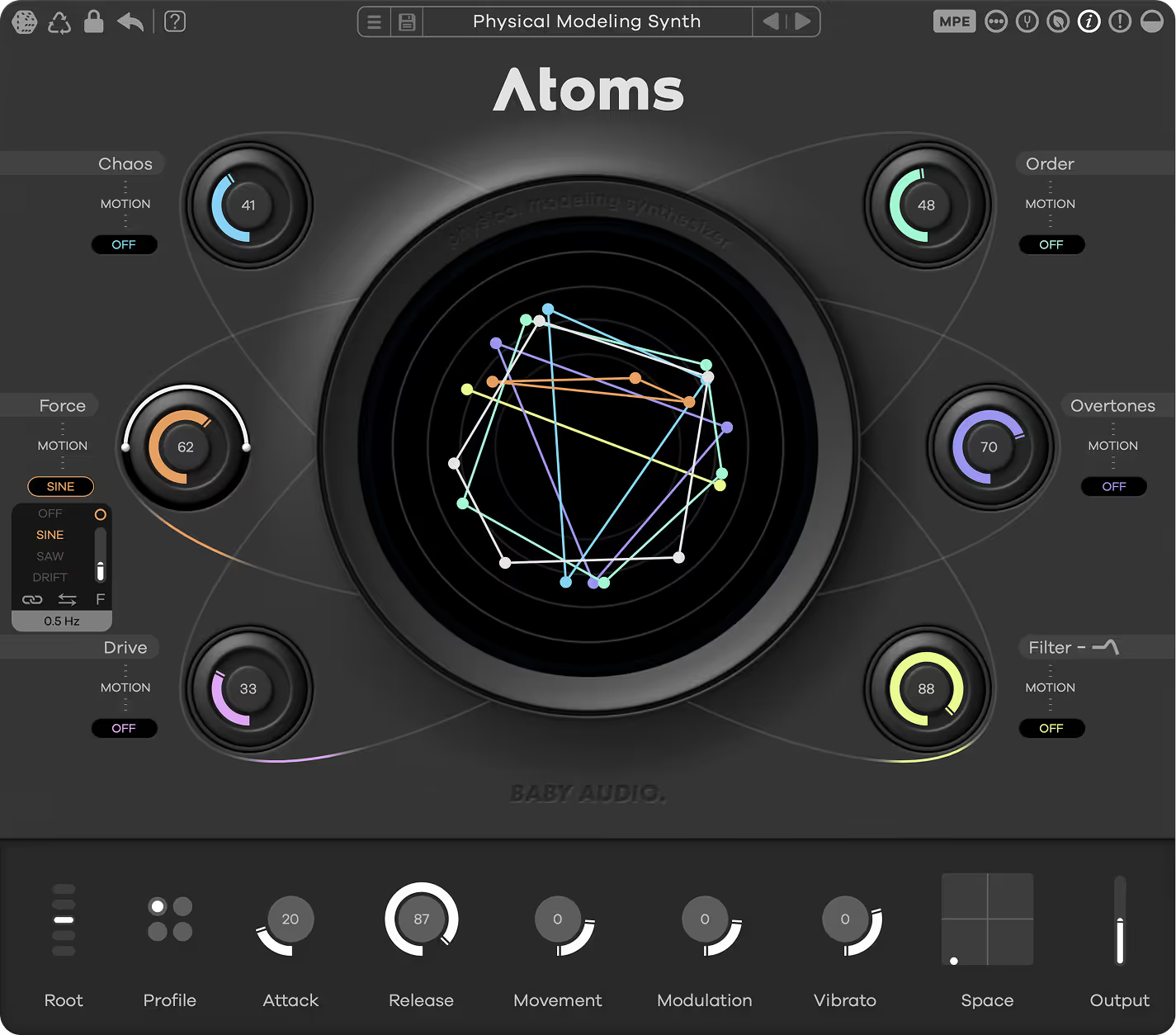
The main interface centres on six parameters. Each can be modulated with motion options, allowing the physical model to move continuously rather than remaining a static object. This is where Atoms becomes more than a source of unusual presets. Slow modulation can turn a pad into something that keeps re-forming over several bars, while more aggressive movement can make the model feel unstable and almost percussive.
The simplicity is deliberate. There is no huge patch-cable matrix confronting the user, despite the complexity underneath. That makes Atoms easier to approach than many experimental synthesis environments. The 250 factory presets reinforce that point, covering enough territory to show what the model can do before users start reshaping it.
The trade-off is precision. If a producer wants a very specific two-oscillator bass, a textbook supersaw or a carefully routed FM patch, Atoms is not the obvious choice. Its strongest results come from accepting some of the engine's physical behaviour and steering it rather than controlling every microscopic stage. That can be inspiring, but it is a different mindset from a general-purpose synth.
In club music, Atoms is probably most valuable away from the obvious centre of the mix. It can supply strange hooks, atmospheric beds, tension layers, organic percussion and tonal FX that make transitions or breakdowns feel less generic. It can certainly make leads and basses, but its identity is strongest when the model is allowed to sound a little unfamiliar.
At the current $49 sale price, Atoms is very easy to justify as a specialist instrument. The regular $99 price is still fair, especially given the 250 presets and the distinct synthesis engine, but it makes more sense as a complementary synth than as the first instrument in a new producer's collection. Its value comes from offering a different starting point, and it does that very well.
AT-DJ did not conduct an independent hands-on test of Atoms. This editorial assessment is based on official documentation, verified specifications and public demonstrations. BABY Audio did not sponsor or pay for this review.