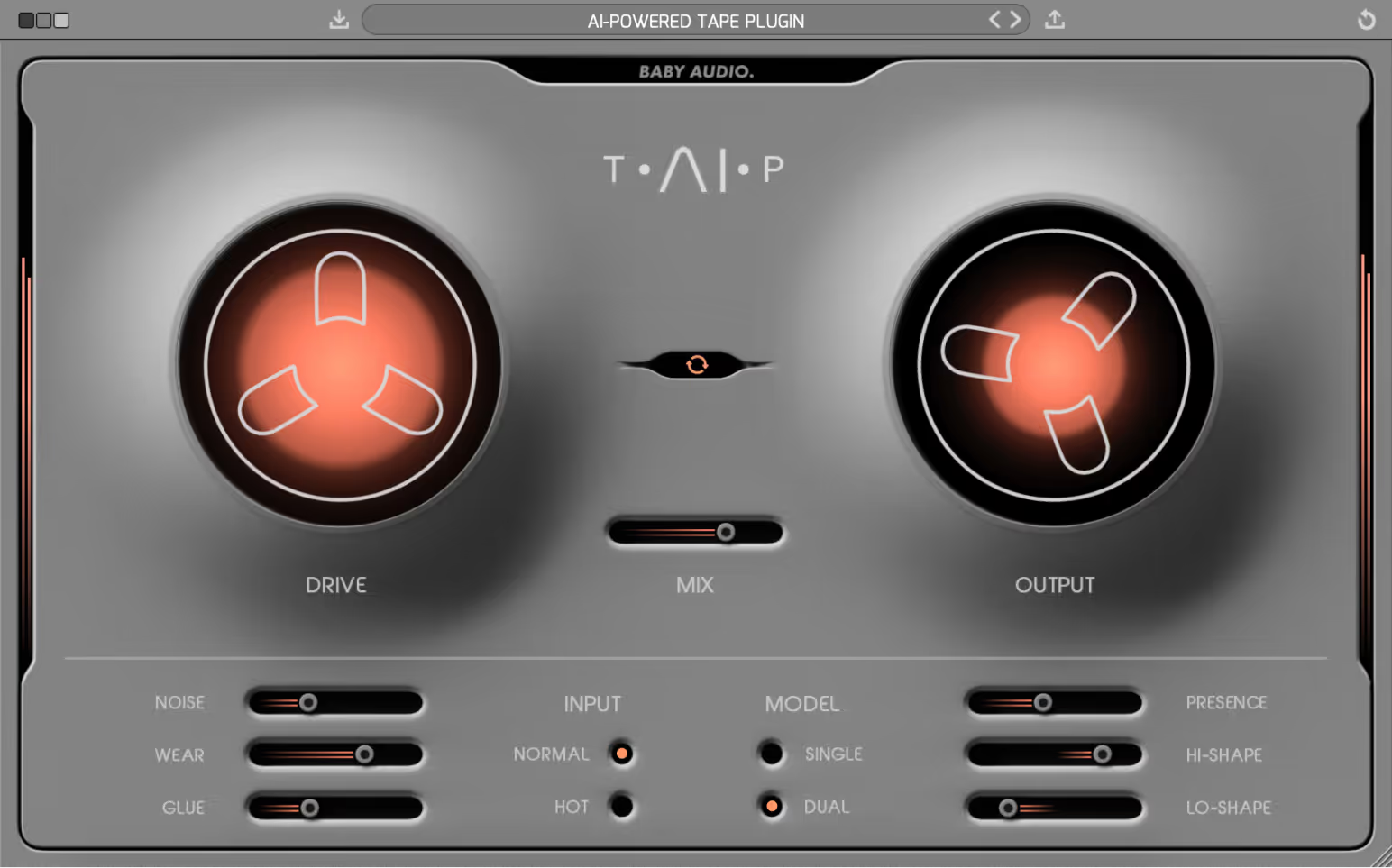
Tape plug-ins have become a category of their own, with products ranging from carefully measured machine emulations to deliberately exaggerated lo-fi processors. TAIP sits somewhere between those two poles. BABY Audio uses a machine-learning model as part of the emulation approach, but the interface is designed less like a museum piece and more like a flexible saturation tool.
The most useful way to think about TAIP is as a spectrum. At conservative settings it can add density, soften edges and create the kind of gentle compression often associated with tape. Push it harder and the behaviour becomes more obvious: saturation turns into distortion, the glue effect can become a deliberate dynamic squeeze, and wear, noise and warble can take the signal towards unstable lo-fi territory.
That flexibility is valuable in electronic production because tape colour rarely has one job. On a drum bus, a small amount of saturation can make individual hits feel more connected. On a synth, stronger drive can shave off digital sharpness and create midrange density. On pads or samples, warble and wear can provide movement. On a full mix, the preservation filters can help retain lows and highs rather than forcing the entire signal through a stereotypically dark tape curve.
BABY Audio is explicit about the AI side of the product. The company says its model was trained on generic material such as sine sweeps and white noise. That is useful context in 2026, when the term AI can imply everything from signal modelling to generative systems. Here it is being presented as a modelling method, not as a content generator.
It is still worth separating that technical story from the manufacturer's stronger marketing claims. No editorial review based on documentation should declare one tape plug-in the most faithful emulation available without controlled comparison against machines and competing software. The more grounded argument for TAIP is that it offers a broad set of tape-like behaviours in a straightforward interface.
The ability to move beyond realism is probably its strongest feature. A strictly calibrated tape machine emulation can be excellent when historical accuracy is the goal, but electronic producers often want the colour without the rules. TAIP allows more wear, more wobble, more compression or a cleaner frequency response than a fixed machine model would naturally provide.
That makes it suitable for techno drums, house loops, synth buses, sampled chords and creative resampling. It is also the kind of plug-in that can be overused. Noise and warble sound impressive in isolation, but too many instances quickly make an arrangement feel uniformly old and unstable. The subtler settings may ultimately be the most useful across a full project.
At the current $39 sale price, TAIP is easy to recommend as a character processor. The regular $99 price places it in a much more competitive field, where buyers should compare workflow and colour against established tape emulations. Even then, its balance between clean saturation, exaggerated glue and lo-fi degradation gives it a clear reason to exist.
AT-DJ did not conduct an independent hands-on test of TAIP. This editorial assessment is based on official documentation, verified specifications, public demonstrations and current pricing. Claims about model fidelity are treated as manufacturer claims. BABY Audio did not sponsor or pay for this review.