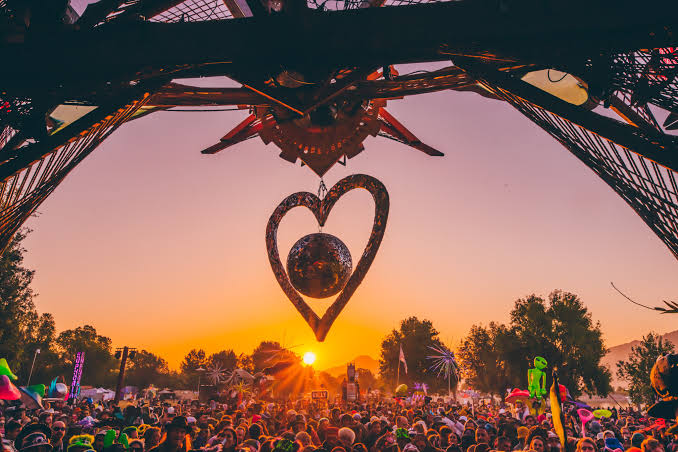
Desert Hearts is trying something deliberately smaller this autumn. The collective has announced a new Microfest in Northern California, moving away from the pressure to make every festival edition larger and instead focusing on a compact gathering built around house, techno and the community that has followed the crew for more than a decade.
The event is scheduled for October in Deloro Valley and is being presented as a limited-capacity experience rather than a downsized imitation of the main festival. That distinction is important. Desert Hearts has always depended on closeness: one dancefloor, long sets, familiar faces and a sense that artists and audience are participating in the same weekend. The Microfest format appears designed to bring those elements back to the foreground.
A smaller frame for the Desert Hearts idea
Festival growth often creates a contradiction. More space, production and ticket sales can make an event more secure, but they can also weaken the social texture that gave it meaning. Desert Hearts has experienced that tension more visibly than most. Its identity was formed through gatherings where the dancefloor remained central for days, with few barriers between performers, organisers and dancers.
A Microfest offers a practical reset. Rather than competing with major West Coast festivals on scale, it can concentrate on pacing, sound and shared space. The idea is not anti-production; it is a decision to make production serve the room rather than dominate it. For a collective whose slogan has always placed house, techno and love on equal footing, that approach feels less like retreat and more like correction.
The line-up reflects the crew's extended family
The announced programme mixes Desert Hearts regulars with guests who fit the collective's broad reading of house and techno. The core names remain important because their back-to-back sets and handovers have historically given the festival a continuous musical character. Rather than presenting every slot as a separate headline moment, the strongest Desert Hearts weekends have worked as one long conversation.
That continuity can be easier to preserve at a smaller event. Artists are able to respond to what happened before them, sets can breathe and the timetable does not need to force a dramatic reset every hour. It also creates room for less obvious selections. A reduced capacity tends to reward DJs who understand the crowd in front of them, not only those who arrive with a fixed festival routine.
The Northern California setting should reinforce that dynamic. Deloro Valley offers distance from the standard urban club circuit without requiring the infrastructure of a vast destination festival. The location can support a temporary community while keeping attention on the dancefloor and campsite rather than on a long list of attractions.
Why intimacy matters to this particular brand
Desert Hearts is often described through its visual language: bright clothing, open-air dancing and a deliberately expressive atmosphere. Yet the musical backbone has always been stricter than the imagery suggests. The collective's best-known DJs work with rolling house, acid, techno and psychedelic transitions, usually over extended periods. That sound benefits from repetition and gradual shifts, which are difficult to appreciate when a festival is fragmented across too many stages.
The one-floor principle associated with earlier Desert Hearts gatherings made musical decisions public. Everyone heard the same records, and the mood of the event changed together. A Microfest can recover some of that shared timeline. Even when dancers move between camp and stage, there remains a common reference point rather than several competing versions of the weekend.

There is also a wider question behind the format. Independent festivals face rising costs in security, insurance, transport, staffing and production. Chasing growth is not always the safest response. A smaller event with clear limits can be easier to manage and more honest about what it can provide. It may also reduce the distance between ticket price and actual experience.
A test of sustainable festival culture
That does not guarantee success. Small festivals still need reliable infrastructure, transparent communication and careful planning around water, weather and travel. Intimacy should never become an excuse for weak organisation. The official Microfest information will therefore matter as much as the line-up, particularly for attendees travelling into a rural setting.
What makes the proposal interesting is that Desert Hearts is not inventing a new personality for the event. It is returning to a scale that suits its existing one. The collective's reputation was built through participation and repeat attendance, not exclusivity. Limiting capacity can protect that culture only if access, logistics and on-site conditions remain clear.

The real measure will be the dancefloor
The Microfest arrives at a moment when festival audiences are increasingly selective. A packed poster is no longer enough to justify travel, accommodation and several days away. People want to know how an event feels, how easy it is to move through and whether its musical identity survives outside the announcement.
Desert Hearts has an advantage here because its central proposition is simple. House and techno run for long stretches, the community gathers around a shared floor and the artists are encouraged to connect rather than compete. The new format gives that proposition less space to hide behind spectacle.
If the Deloro Valley edition can maintain sound quality, sensible logistics and the relaxed handovers that define the collective at its best, Microfest may become more than a one-off experiment. It could offer a useful model for dance festivals that want to remain ambitious without treating expansion as the only sign of progress.




THE CONVERSATION
Opinions, context and replies from the AT-DJ community.