Driftmoon has launched Sōnnux Music, a new independent trance label built around a deliberately narrow idea: fewer releases, stronger identity and enough room for orchestration, progressive detail and main-room scale to exist under the same roof. The first record, “High Wall”, arrived on 24 July 2026 as catalogue number SNX001.
The label enters a trance market that is busy but far from uniform. At one end, faster and harder material has pushed into festival sets; at the other, progressive and cinematic approaches have found new audiences through artists who are less interested in repeating the classic uplifting template. Sōnnux is clearly positioning itself in that second space, while still keeping the physical lift and melodic structure expected from trance.
Sōnnux Music starts with three distinct lanes
The most interesting part of the launch is not simply that Driftmoon now has his own imprint. It is the way the catalogue has been divided from the beginning. The main Sōnnux line is aimed at melodic and uplifting trance at 130 BPM and above. Sōnnux Deep moves towards slower, progressive and hypnotic material, while Sōnnux Opus is designed for full orchestral and hybrid works.
That structure gives the label room to expand without turning into a catch-all. Plenty of artist-led imprints begin with a clear sound and gradually become harder to read as release schedules grow. Sōnnux is trying to solve that problem in advance by separating function while keeping an overall aesthetic discipline.
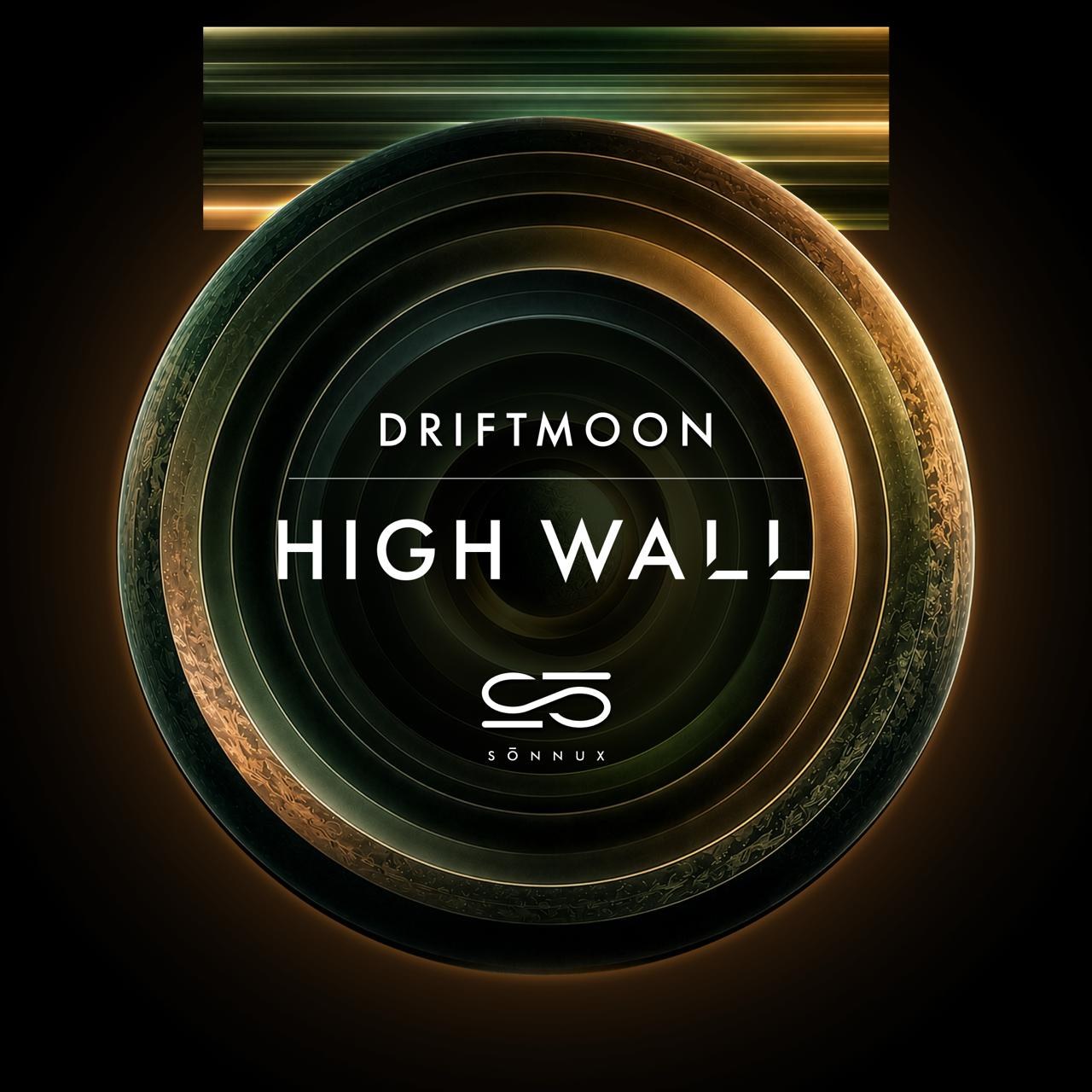
“High Wall” is designed as a statement rather than a test release
The label describes “High Wall” as the record that establishes its standard, and the surrounding context supports that. The track was selected as the official music for the Luminosity Beach Festival 2026 aftermovie and has also appeared on A State of Trance. Those placements matter because they put the first catalogue number directly inside the culture the label wants to address: dedicated trance audiences rather than a vague electronic crossover market.
Musically, the project leans into Driftmoon’s long-standing interest in cinematic scale. The label language repeatedly returns to orchestral discipline, which is a useful phrase because it suggests structure rather than decoration. Strings, choirs and harmonic drama can easily become excess in trance; the more difficult task is making those elements serve the arrangement and the dancefloor.

The catalogue already shows where the label wants to go
Sōnnux has published an unusually transparent early catalogue. The main line lists forthcoming Driftmoon material including “Pluckstorm”, with a DIM3NSION remix, alongside “Forbidden Flame” and “Spectre Noir”. Sōnnux Deep is set to begin with Driftmoon presents FRËŌ — “Echoes of Africa”, while the Opus strand will open with Driftmoon presents KLĀVIS — “High Wall Overture”.
That naming system may look formal, but it makes the creative plan easy to understand. Rather than forcing every Driftmoon idea into one artist profile, the different aliases allow separate musical instincts to develop without confusing the label’s core. FRËŌ points towards the deeper material; KLĀVIS gives the orchestral work its own frame.
Sōnnux says it is accepting unreleased demos across its lines, with artists asked to identify which strand they believe suits the material. That is a small detail, but it reinforces the idea that the three divisions are intended as working A&R categories rather than branding alone.
Why an artist-led trance label still makes sense in 2026
Launching a label now means entering a world where distribution is easier than ever but attention is much harder to hold. An imprint cannot survive on catalogue numbers alone. It needs a recognisable editorial logic: listeners should understand why a record belongs there before they see the logo.
Trance has always been particularly dependent on that kind of identity. Labels once acted as maps through an enormous scene: a sleeve, catalogue prefix or mastering style could tell a DJ roughly what kind of record was inside. Streaming weakened some of those signals, but it did not remove the need for curation. In fact, the flood of weekly releases makes a clear A&R voice arguably more valuable.
Black Hole gives Sōnnux infrastructure without erasing its identity
Sōnnux operates within the wider Black Hole Recordings family, giving the project a connection to one of trance’s longest-running independent networks. The useful part of that relationship is not prestige for its own sake; it is infrastructure. Distribution, audience reach and genre knowledge allow a small imprint to focus on repertoire rather than rebuilding every part of the release chain.
The challenge will be maintaining the restraint promised at launch. “Fewer records, finished properly” is a good principle precisely because it is difficult to keep once demos arrive and schedules begin filling. If Sōnnux can protect that pace, its three-lane structure could become a genuine point of distinction rather than another short-lived label concept.
A label built around patience in a high-volume market
Sōnnux is not attempting to reinvent trance with a manifesto. Its idea is more practical: give melodic, deep and orchestral work separate space, keep the release rate controlled and make each catalogue number justify itself. That approach sounds conservative until you compare it with an industry built around constant output.
The first test is already public. “High Wall” establishes the scale and the polish; the next releases will show whether the label can widen its roster and still sound coherent. If it does, Driftmoon may have created something more useful than another artist imprint: a small but readable map through several strands of modern trance.





THE CONVERSATION
Opinions, context and replies from the AT-DJ community.