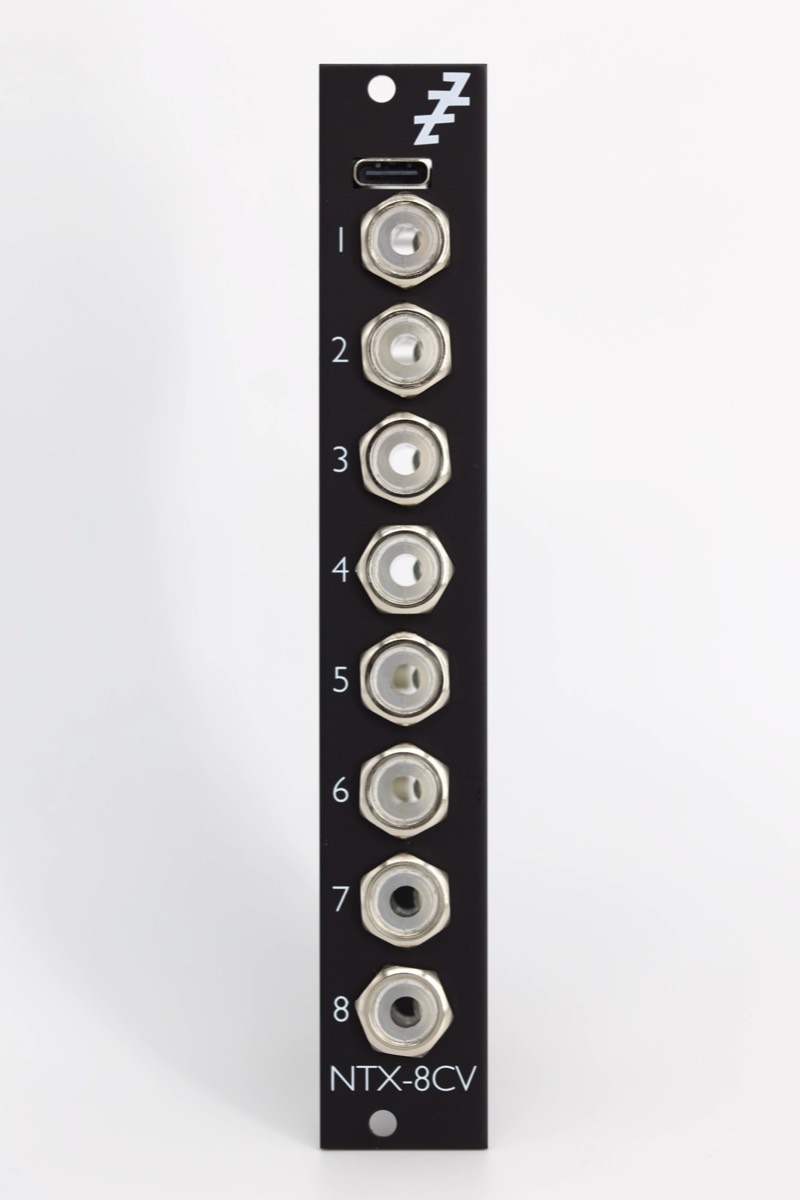
Expert Sleepers has released the NTX-8CV, a 4HP Eurorack module built around three jobs that are usually spread across separate bits of hardware. It converts USB MIDI to control voltage, works as an eight-channel DC-coupled USB audio and CV interface, and expands the company’s disting NT with another eight outputs. The specification sheet is tidy. The implications for a hybrid studio are much broader. This is a module for people who want a laptop, tablet, controller and modular system to talk without turning the patch into a small IT department.
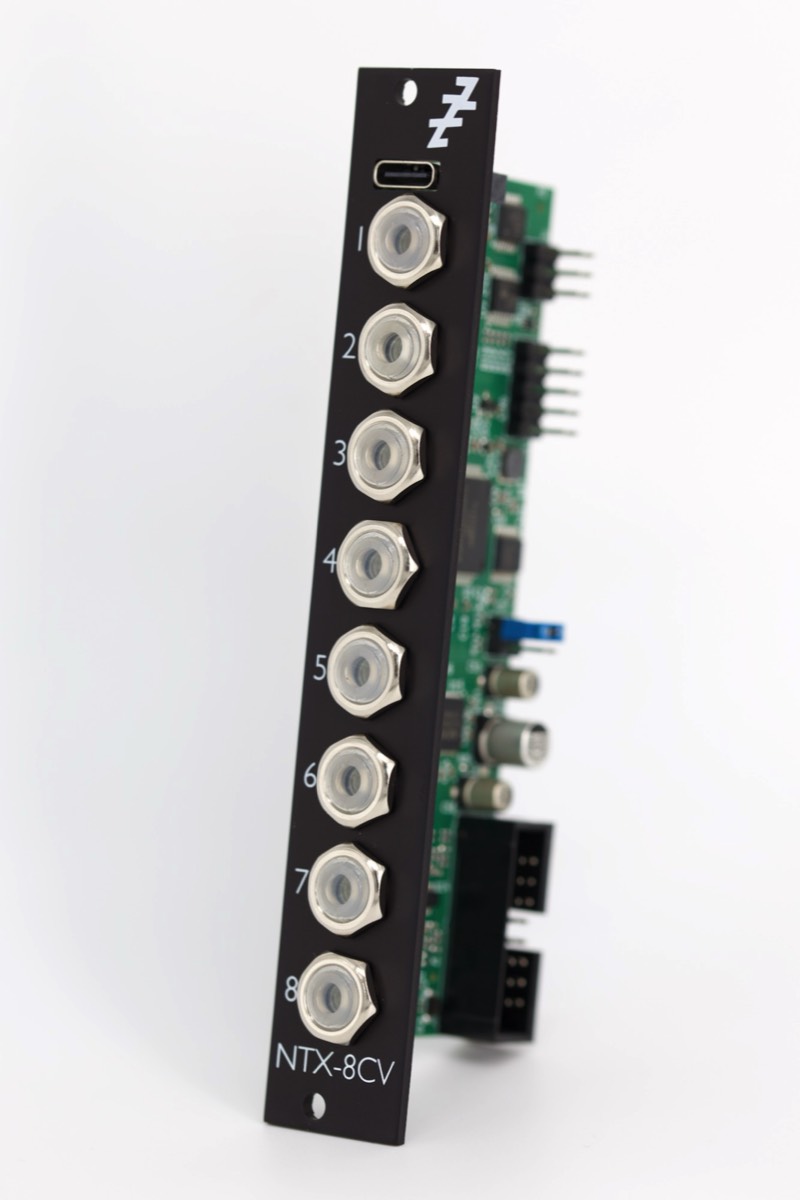
The NTX-8CV is available now at a stated UK price of £179 including VAT, with US and European pricing listed by the manufacturer. Its front panel is almost comically sparse: one USB-C socket and eight numbered outputs. No screen. No encoder. No menu diving from the rack. Configuration happens through the relevant software or connected device, while the module concentrates on moving data and voltage. That restraint is the point. In a case full of multifunction modules, another elaborate interface can create more work than it removes.
Three roles packed into 4HP
As a MIDI-to-CV converter, the NTX-8CV draws on the architecture of Expert Sleepers’ FH-2. The USB-C port can operate as a class-compliant device when attached to a computer or tablet, but it can also act as a USB host. Plug a compatible MIDI controller straight into the rack and the module can translate its messages into pitch, gates, modulation or other control signals. That host mode matters. It removes the need to keep a computer in the middle when the controller is the only digital element required.
The second role is closer to an interface. Its eight outputs are DC-coupled, so they can carry ordinary audio or slowly changing control voltages. That makes the module compatible with software environments designed to address modular hardware directly, including Bitwig Studio’s CV devices, Ableton CV Tools and Expert Sleepers’ own Silent Way. A DAW can send envelopes, LFOs, clock, pitch information or audio-rate modulation through USB and into the rack. Eight outputs in 4HP is an efficient bridge, especially in smaller systems where panel space is already under pressure.
USB host mode changes the practical setup
USB host support is often the feature that looks minor until it solves a real problem. Many controllers only speak USB, while modular systems still expect analogue voltage or five-pin MIDI converted elsewhere. A host-capable module can sit between those worlds without an external box. A small keyboard can become a direct pitch-and-gate source. Faders can address envelopes or mixer levels. Pads can trigger percussion. The patch stays hardware-led, but it is no longer limited to controllers designed specifically for Eurorack.
There are caveats. A connected USB device draws power, and the rack’s supply needs enough headroom. The manufacturer lists the module itself at 74mA on the +12V rail and 17mA on -12V, before the attached device is considered. Compatibility also depends on class-compliant behaviour. This is not a universal adapter for every controller ever made. Reading the official manual before planning a live rig is less glamorous than buying a new module, but considerably more useful.
Eight outputs for DAW-to-rack modulation
The audio/CV interface mode is likely to attract producers who already work in a DAW but want modular hardware to behave as part of the session rather than as an isolated instrument. Sending clock is the obvious application. The more interesting use is automation: drawing a long curve in software, routing it to a filter or wavetable position, then recording the result back through a separate audio interface. Complex modulation that would take several rack modules can be built quickly, edited precisely and recalled with the project.
That workflow will not appeal to everyone. One reason people build modular systems is to get away from timelines and mouse-based editing. Yet hybrid does not have to mean permanent laptop dependence. The NTX-8CV gives the user choices. It can be the DAW bridge on one day and a direct controller host on the next. The same outputs can carry slow control signals, triggers or audio-rate material. Flexibility is useful when it does not demand a large front panel or a new operating philosophy.
The disting NT expansion is the deeper play
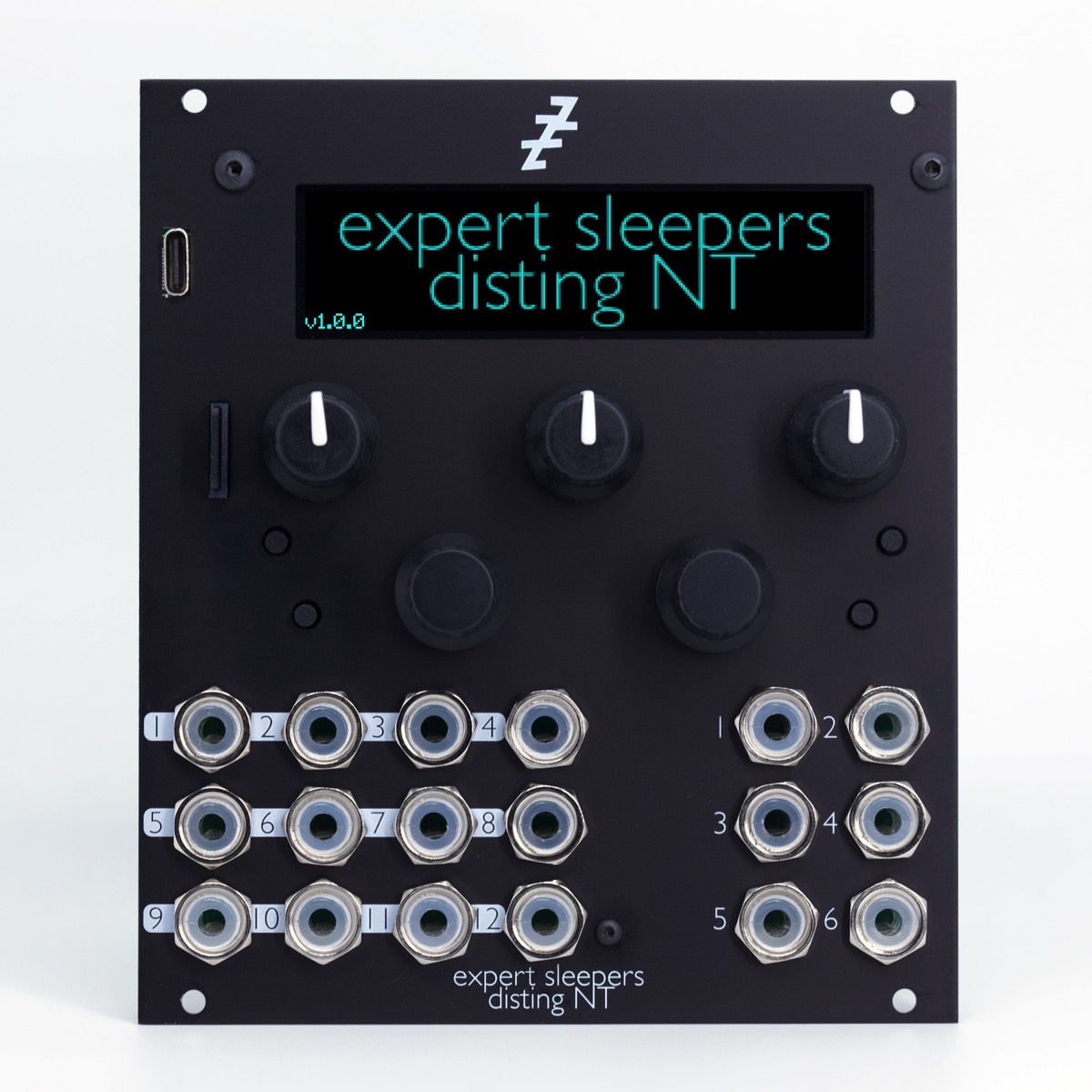
The third function makes most sense inside the Expert Sleepers ecosystem. Connected to a disting NT, the module adds eight CV outputs. More units can be daisy-chained, taking the expansion up to 64 additional outputs beyond the disting NT’s own connections. That is an extreme figure for most racks, but it explains the design philosophy. The NTX-8CV is not simply a compact converter; it is also a way of letting a software-heavy modular processor reach far more destinations at once.
A disting NT can run multiple algorithms simultaneously, combining utilities, sampling, synthesis, delays and control processes. Output count becomes the bottleneck surprisingly quickly. Extra physical destinations let those internal functions address several voices, effects and modulation paths without constant repatching. For a performance case built around the NT as a central processor, the expansion role may be more valuable than the USB interface. For everyone else, it remains optional rather than a reason to buy into the larger system.
Where the NTX-8CV earns its rack space
The module’s strongest argument is not novelty. MIDI-to-CV exists. DC-coupled interfaces exist. Expanders exist. Putting all three into 4HP, with a dual-role USB port and eight outputs, creates a useful overlap. It suits compact live systems, producers who alternate between computer-led and hardware-led sessions, and disting NT users who have run out of physical control paths. The clean panel also makes sense in a module that is likely to spend its life patched and left alone.
There is one practical limitation worth repeating: a USB cable is not included. That is hardly dramatic, though the correct cable and power arrangement should be considered part of the setup rather than an afterthought. The module is 36mm deep, so very shallow skiffs deserve a measurement before purchase. Small modules have a habit of revealing large logistical details.
Specialist coverage from Synth Anatomy has focused on the amount of functionality squeezed into the panel. That is fair, but the more convincing point is how little ceremony the device adds. It routes USB into a modular system, turns software signals into voltage and extends another module’s reach. No grand reinvention. Just a compact answer to several boring problems that become very important halfway through a patch or ten minutes before a set.



THE CONVERSATION
Opinions, context and replies from the AT-DJ community.