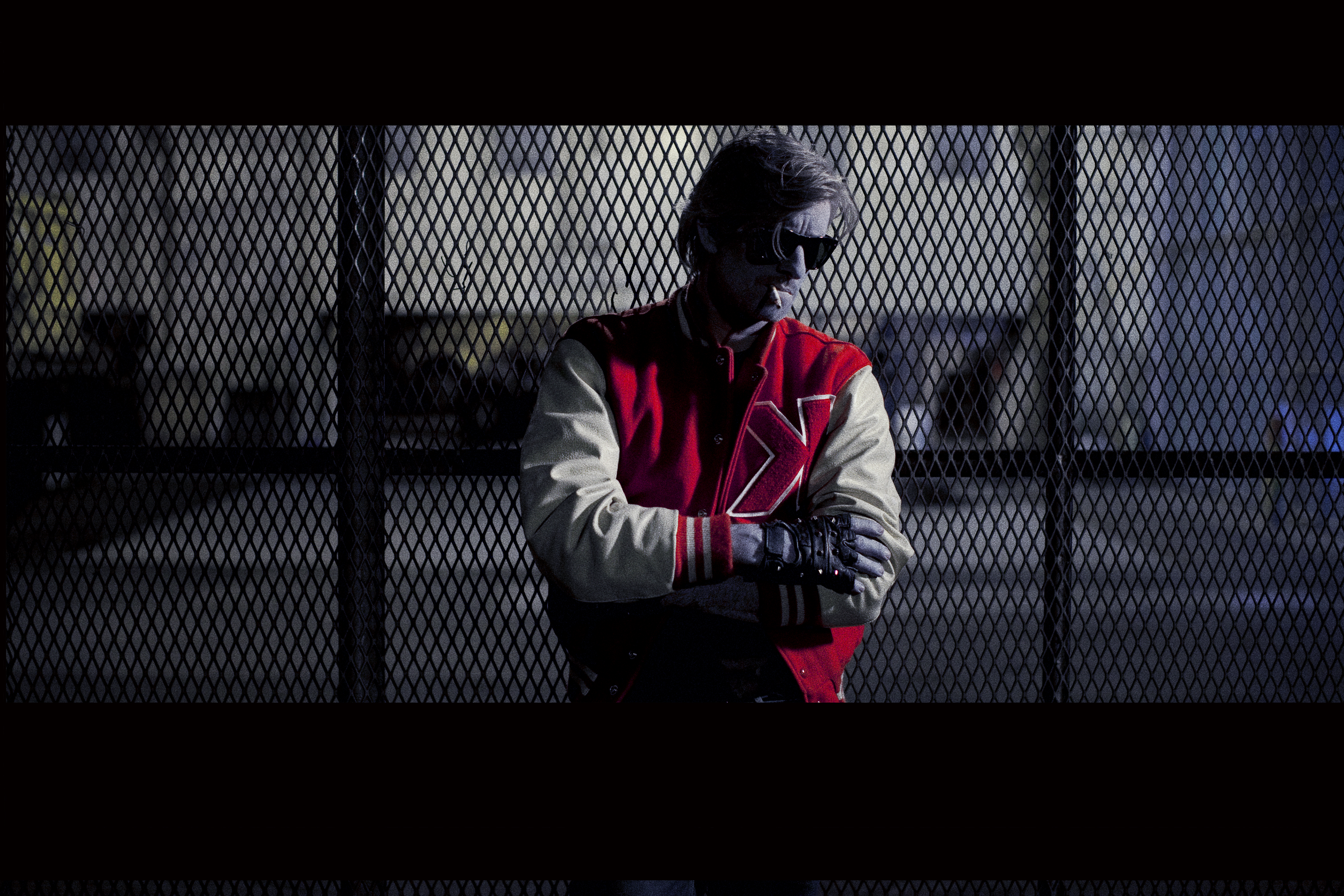
Kavinsky, the French producer and DJ born Vincent Belorgey, has died aged 50. He was found dead at his home in Paris on the evening of Tuesday, 28 July. The Paris prosecutor’s office has opened an inquiry into the cause of death and said first responders found no suspicious circumstances at the scene.
The news brings an abrupt end to one of the most distinctive careers in modern French electronic music. Kavinsky never presented himself as a conventional producer. He built an entire fiction around the project — part undead driver, part arcade anti-hero — and used it to frame music full of chrome-plated synths, clipped drums and melodies that seemed to arrive from a lost late-night VHS tape.
Kavinsky built a world, not just a sound
Belorgey began releasing music in the mid-2000s, at a point when the second wave of French touch was widening the space between house, electro and club-facing rock. His first EP, Teddy Boy, arrived in 2006 and introduced the imagery that would stay with him for years: sports cars, empty roads, danger, desire and a very specific affection for 1980s pop culture.
The fictional backstory cast Kavinsky as a man killed in a Ferrari Testarossa crash in 1986, only to return two decades later as something not quite human. It was more than sleeve-art theatre. The story connected his artwork, videos, track titles and production choices, giving the project a coherence that made his electronic music feel like an imaginary film score.
Early tracks including “Testarossa Autodrive”, “1986” and “Dead Cruiser” established that language. He shared a scene with a remarkable generation of French artists, but his music had its own gait: less concerned with spotless club functionality than with atmosphere, narrative tension and the dramatic force of a properly chosen synth line.
How “Nightcall” travelled far beyond the club
The decisive breakthrough came with “Nightcall”, released in 2010. Produced with Guy-Manuel de Homem-Christo and featuring Lovefoxxx, it found a rare balance between menace, melancholy and electronic pop. The bassline moves with deliberate weight, the processed vocal sets the scene, and the chorus opens into something far more vulnerable than the project’s mechanical surface might suggest.
Its placement over the opening credits of Drive in 2011 pushed the track into global culture. The association became so strong that, for years, hearing those first notes seemed to summon images of Los Angeles after dark. Yet “Nightcall” outgrew the film, finding a second and third life in clubs, festivals, playlists and countless reinterpretations.
Kavinsky followed it with Outrun in 2013. His debut album gathered the mythology and sound of the earlier EPs into a broader statement, with a larger cast and a more expansive production. It also helped codify a vocabulary that would later be widely labelled synthwave, though Kavinsky’s roots remained tied to electro, French house and soundtrack logic.
A carefully judged return
After a long period of relative quiet, Kavinsky returned in 2022 with Reborn. The record did not simply recreate Outrun. Its retro-futurist frame was still there, but the arrangements felt cleaner, the voices were brought closer to the front and the material was less tightly enclosed by the original character.
His appearance at the closing ceremony of the Paris 2024 Olympic Games placed “Nightcall” back at the centre of public attention. Performed with Angèle and Phoenix, the song filled a stadium nearly fifteen years after its release. It was a reminder that electronic music can move between underground context and mass spectacle without necessarily losing its identity.
A singular loss for French electronic music
Kavinsky’s death comes at a point when his place in recent electronic culture had become difficult to dispute. He was not the most prolific artist of his generation, nor the most visible, but he understood the power of a tightly drawn identity better than most. A few seconds of synth, a sleeve image or the red glow of headlights was often enough to place the listener inside his world.
His catalogue also shows how one track can grow far beyond the moment that produced it. “Nightcall” emerged from a specific French scene, passed through cinema, reached a mass audience and became part of a shared musical memory. Its success was enormous, but it never erased the rest of his work or the odd charm of that dead driver returning after dark to make records.
The cause of death remains under investigation. Until the authorities release further information, speculation should be treated with caution. What is confirmed is that Vincent Belorgey has died, and French electronic music has lost an artist who was quiet away from the spotlight and unmistakable the moment his machines came alive.

THE CONVERSATION
Opinions, context and replies from the AT-DJ community.