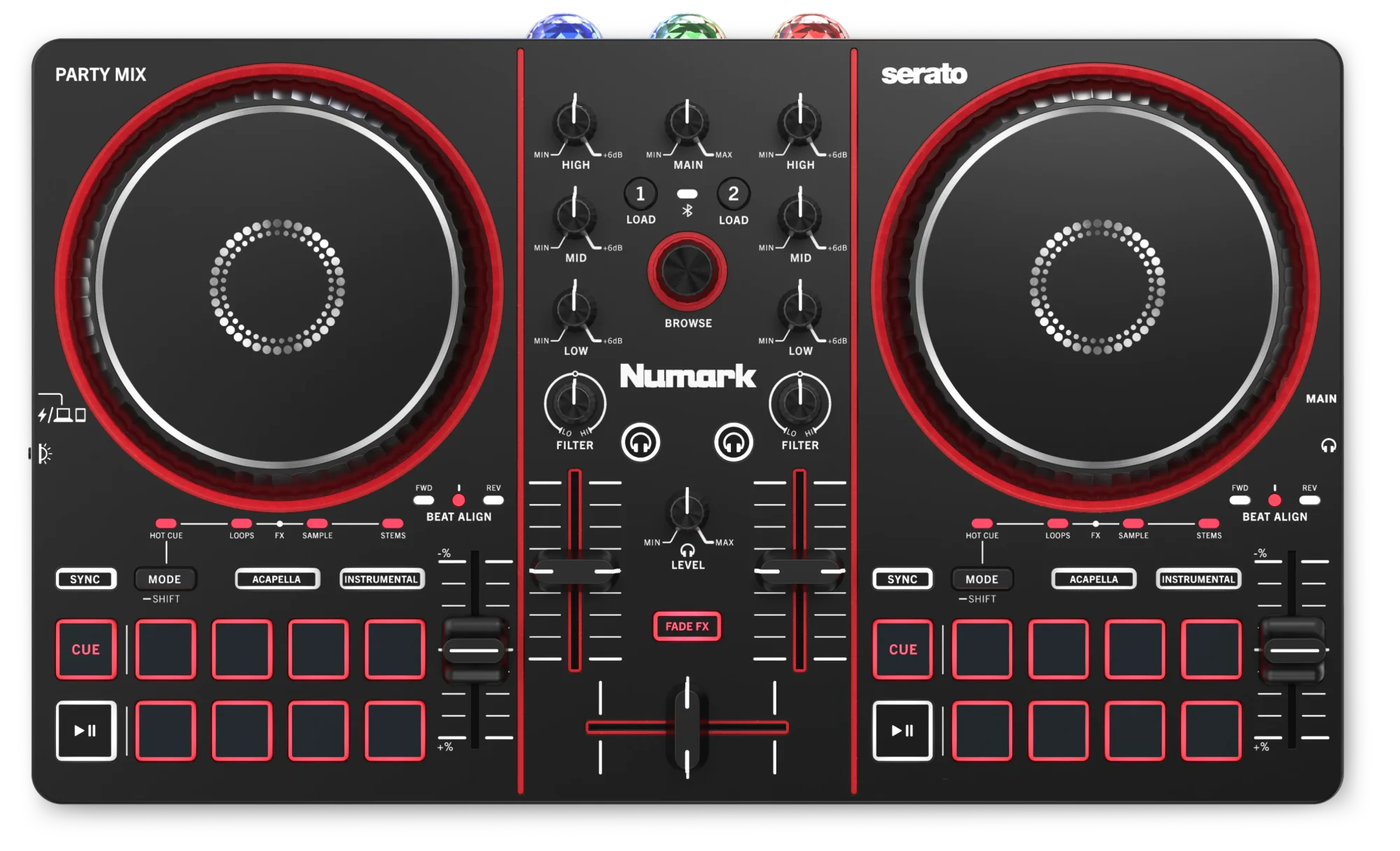
Numark Party Mix III arrives at a point when entry-level DJ gear is becoming both more capable and more confusing. The new two-channel controller keeps the familiar all-in-one formula — compact decks, built-in audio and a light show — while adding features that would have been considered unusually ambitious on a beginner unit only a few years ago.
The headline changes are stems control, Bluetooth Low Energy MIDI, eight performance pads per deck and a fuller mixer section with three-band EQ and filters. Numark is clearly trying to shorten the distance between a first controller and the workflows now common in current DJ software.
Party Mix III is built around the first hour of DJing
The most important thing about a beginner controller is not how many functions appear on the box. It is whether someone can connect it, hear a cue mix, load two tracks and understand what the controls are doing without spending the evening in a support forum. Party Mix III stays close to that basic task.
It is class-compliant over USB-C, bus-powered and includes a built-in audio interface for master and headphone monitoring. The controller works with Serato DJ Lite on desktop and Algoriddim djay across desktop and mobile platforms. That combination matters because many new users now begin on a phone or tablet rather than a laptop.
Stems and Beat Align change the learning curve
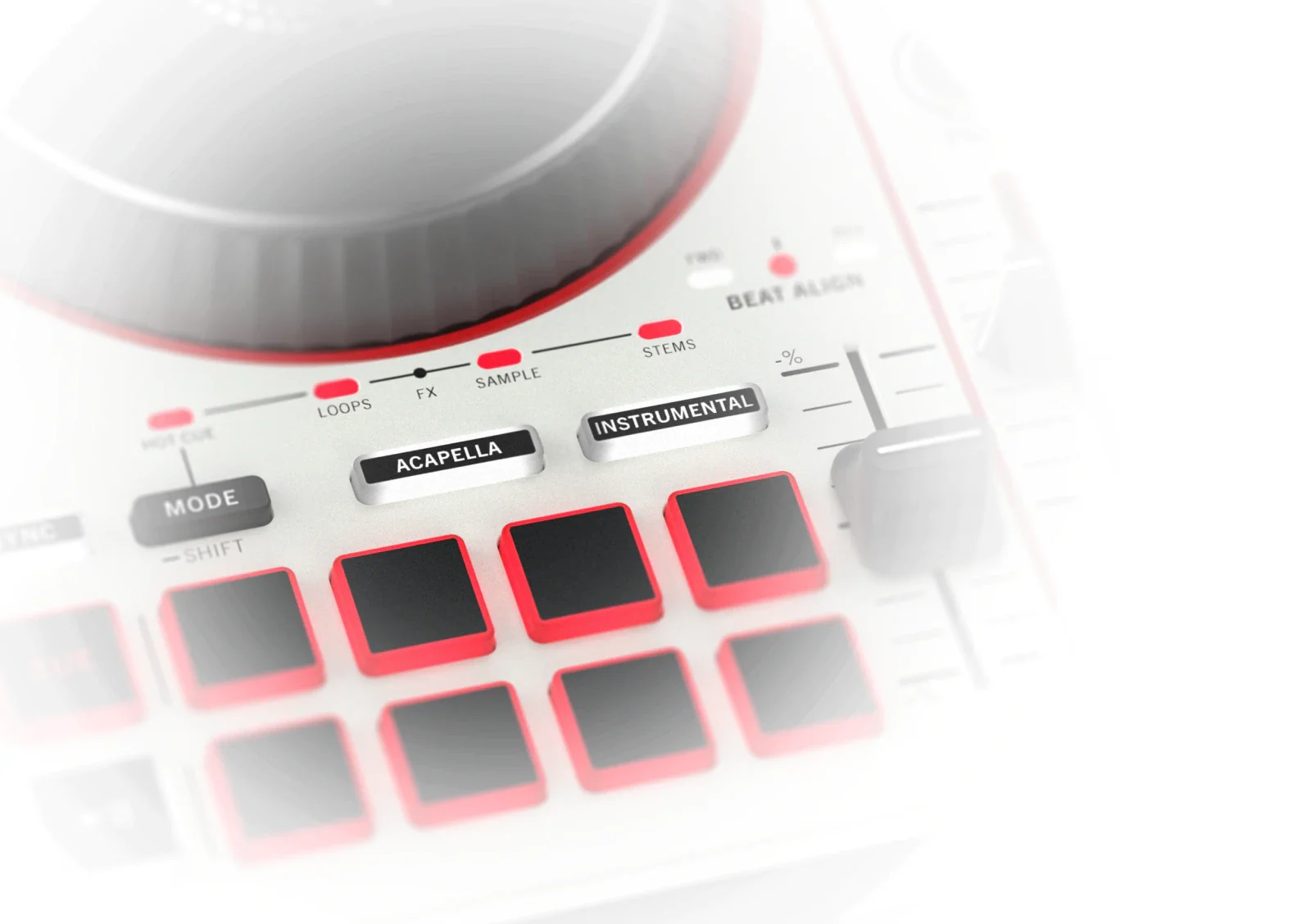
Stems are no longer reserved for flagship software and expensive controllers. Party Mix III offers dedicated acapella and instrumental controls, alongside pad-based access to separated vocals, drums, bass and other elements where the chosen software supports it. For a newcomer, that can make mixing feel immediate: remove a vocal, layer an instrumental and the result is obvious.
There is a trade-off. Stems can also let people avoid learning phrasing, EQ and track selection, the less glamorous skills that make a set coherent. Used well, they are a creative tool. Used as a shortcut, they can produce busy mixes that sound impressive for thirty seconds and tiring soon afterwards.
Numark’s Beat Align indicators take a similar approach to learning. The lights show when a track needs nudging forwards or backwards, offering visual guidance while the user tries to lock two records by ear. It is a sensible bridge between sync and fully manual beatmatching, especially for anyone who struggles to understand why two waveforms still sound loose.
A fuller mixer section makes more sense than gimmicks
The previous Party Mix controllers were recognisable for their rear-facing LED light show. That remains, but the more useful upgrade is the mixer. Each channel now has high, mid and low EQ plus a dedicated filter. Those controls give beginners a clearer sense of how frequencies overlap and why a transition can become muddy even when the beats are aligned.
The controller also includes post-fader effects, Fade FX and expanded pad modes for hot cues, loops, samples and effects. Fade FX applies effect and EQ movement through the crossfader, which is deliberately easy to trigger. It is playful rather than subtle, but that fits a controller designed to reward experimentation quickly.
Bluetooth is useful, but expectations need managing
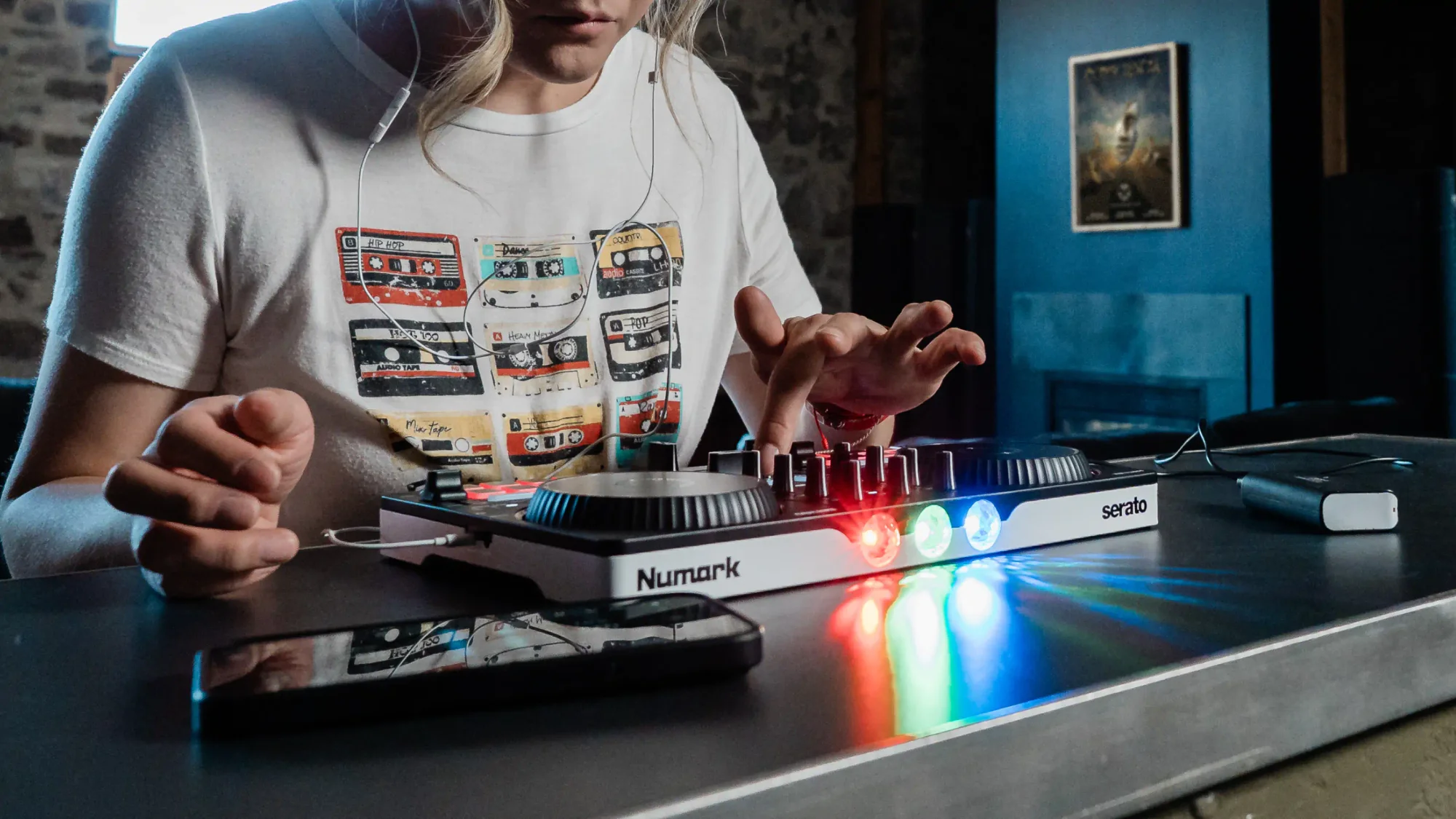
Bluetooth support is easy to misread. Party Mix III uses Bluetooth Low Energy for MIDI control with compatible versions of djay; it is not a promise of completely wireless, latency-free audio in every setup. Users still need to think about where the sound is coming from and how headphones are connected.
Even so, the option to control a mobile app without a USB data cable is attractive for casual practice, small house parties and quick setups. The controller weighs 1.1 kg and measures 339 by 205 by 47 mm, so it is small enough to live in a backpack without turning every journey into a gear decision.
The audio specification is 24-bit/48 kHz, entirely appropriate for the intended use. Nobody buying this model should expect club-standard connectivity or professional booth outputs, but that is not the point. Its role is to provide a complete, understandable signal path at a low level of complexity.
Numark is selling a route into DJ culture, not a final setup
The controller is bundled with free software access and a structured set of lessons made with Crossfader. That educational layer is one of the smarter parts of the launch. Hardware often reaches beginners before context does; a clear path from unboxing to a first recorded mix can be more valuable than another effect mode.
Party Mix III will not satisfy a DJ who needs balanced outputs, four channels, standalone playback or detailed hardware effects. It is also unlikely to be the controller someone keeps for a decade. What it offers instead is a credible first step that does not feel immediately obsolete.
The black version is available worldwide, with a cream edition due through selected retailers. The real test will be price, local availability and how consistently the promised mobile integrations work across devices. On paper, though, Numark has focused on the right things: clear controls, direct feedback and enough room for a beginner to discover why mixing records becomes addictive.






THE CONVERSATION
Opinions, context and replies from the AT-DJ community.