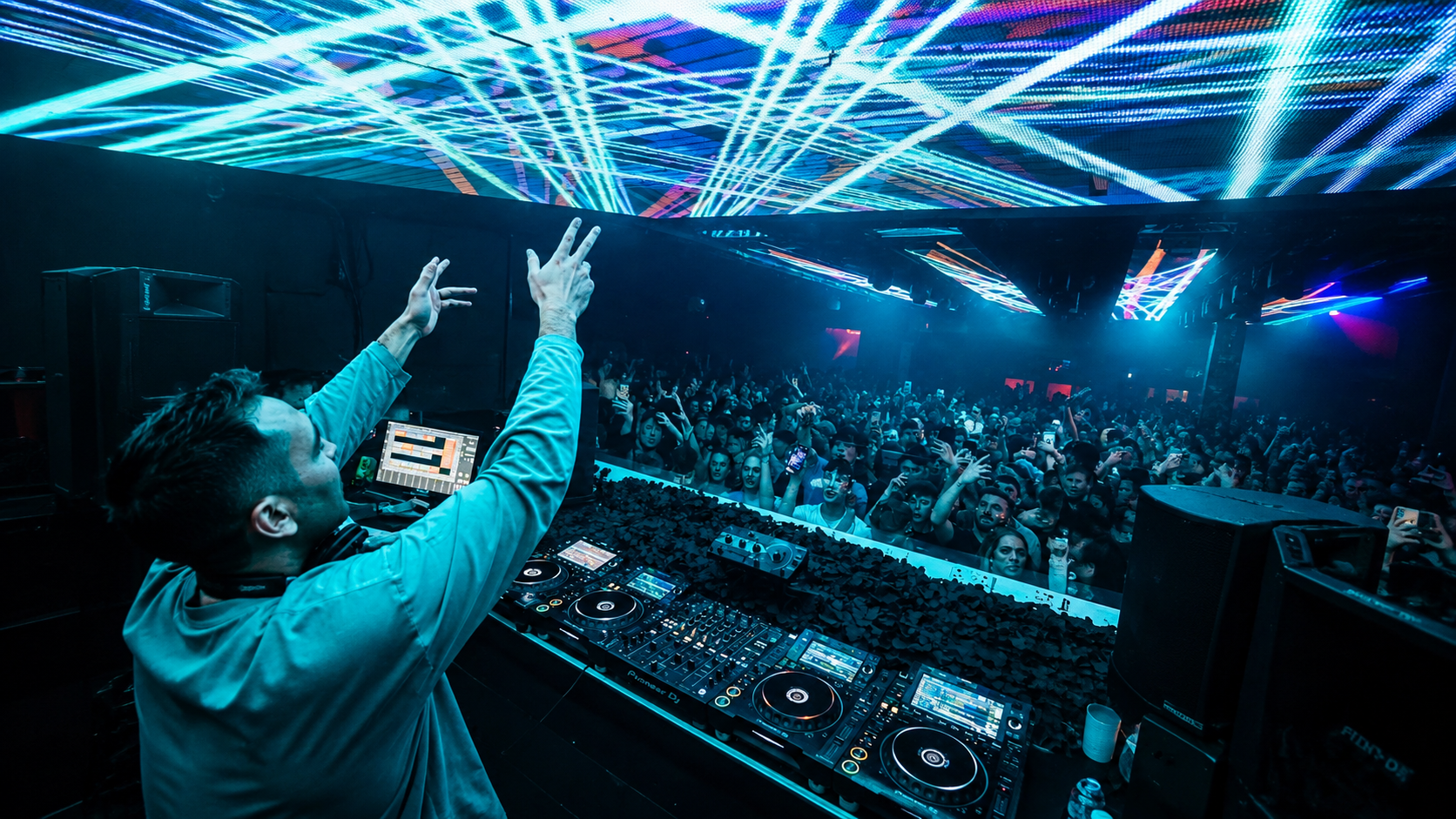
Tank Sheffield has closed after 12 years at 53–55 Arundel Gate. The club held its final party on Saturday 8 August, bringing an end to a venue that became closely associated with Sheffield bassline, house and harder strands of UK club music. Its closing announcement cited rising costs and mounting operational obstacles, with the team saying the venue could no longer be sustained.
Twelve years below Arundel Gate
Tank opened in 2014 and built its reputation around a compact basement environment rather than large-scale production. With a capacity of roughly 400, the room sat at a useful size for local promoters: big enough to host touring names, small enough for residents and regional scenes to remain visible on the same calendar. That balance helped the club survive through repeated shifts in UK nightlife and through the disruption of the pandemic years.
The booking history reflected Sheffield’s own club lineage. Bassline and speed garage had a strong presence, but the venue also hosted house, techno and drum & bass. Jamie Duggan was closely linked to the club, while visiting artists over the years included figures from several corners of UK dance music. Tank’s scale encouraged bills where regional DJs could appear alongside more established guests without feeling detached from the room.
The final party arrived with very little distance
The closure was announced only days before the last event. The final listing billed “One Last Dance” from 21:00 until 05:00 on 8 August, with admission restricted to over-18s. That short notice left little room for a long farewell season. Instead, the venue compressed its goodbye into one weekend and framed the decision around the economics of keeping the space open.
The team referred to monthly operating costs that had continued to climb and to obstacles that made the business progressively harder to run. Those pressures are familiar across British nightlife, but each closure has its own local impact. In Sheffield, losing a 400-capacity room removes a rung between very small bars and bigger spaces, particularly for promoters who need a dedicated dancefloor without taking on the risk of a thousand-plus capacity venue.

A room tied to Sheffield’s bassline circuit
Sheffield’s relationship with bassline predates Tank by years, and the club did not invent that history. Its contribution was to keep a central, regular room available for the sound while younger DJs and newer house bookings entered the programme. Nights built around local selectors could sit next to touring artists, keeping the venue connected to the city rather than treating Sheffield as a stop between bigger markets.
That kind of continuity is difficult to quantify in attendance figures. A medium-sized club gives promoters somewhere to develop an audience before moving into larger halls, and it gives DJs repeated opportunities to play outside headline slots. When such a room disappears, the effect is often felt across several smaller nights rather than through one obvious gap in the calendar.
What remains after the final dance
Tank’s website is now little more than a marker for the venue, while historic listings document the range of nights that passed through the basement. There has been no announcement of a replacement site or relaunch under the same name. For the moment, the closure is final and leaves Sheffield promoters to redistribute those bookings across the city’s remaining rooms.
The most useful way to remember Tank is through that function: a relatively small club that stayed active for 12 years, gave bassline a dependable home and provided a central stage for artists at very different points in their careers. Its last event closed the door quickly, but the gap it leaves will take longer to measure.




THE CONVERSATION
Opinions, context and replies from the AT-DJ community.