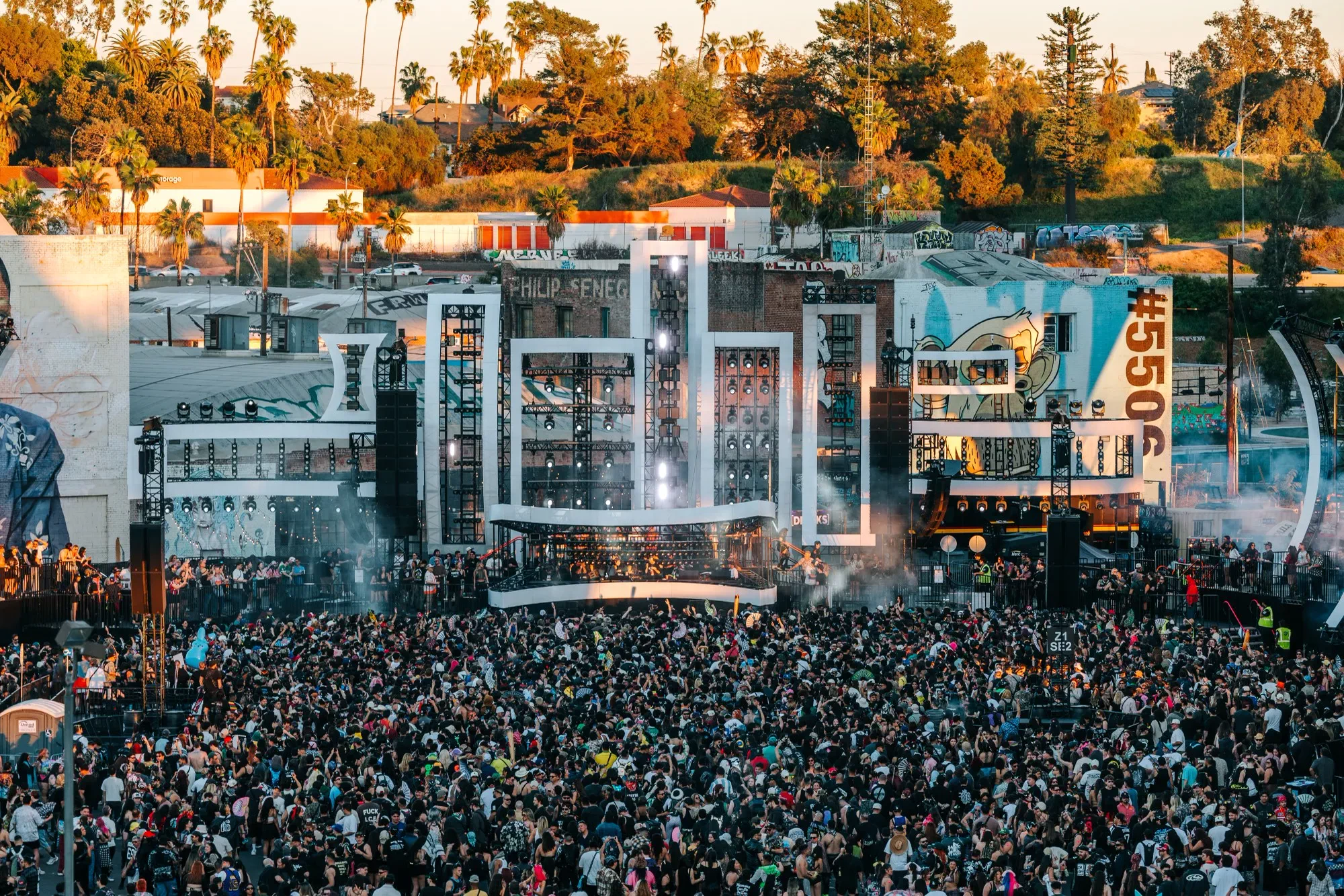
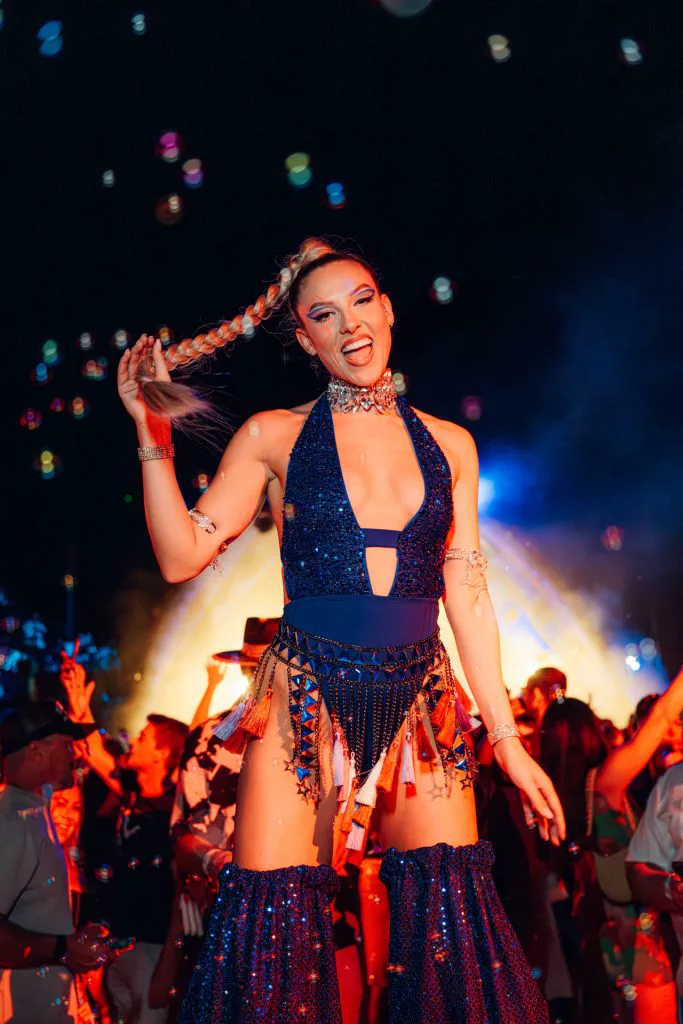
Tomorrowland has closed the Belgian chapter of Consciencia after two weekends in Boom. The festival reports that 400,000 people from more than 200 countries passed through De Schorre, once again turning a local park into a temporary city built around electronic music. The scale is familiar by now, but familiarity should not make it invisible. Few events ask club culture to operate simultaneously as tourism, theatre, broadcast, logistics network and global pop spectacle.
A mainstage asked to carry the whole story
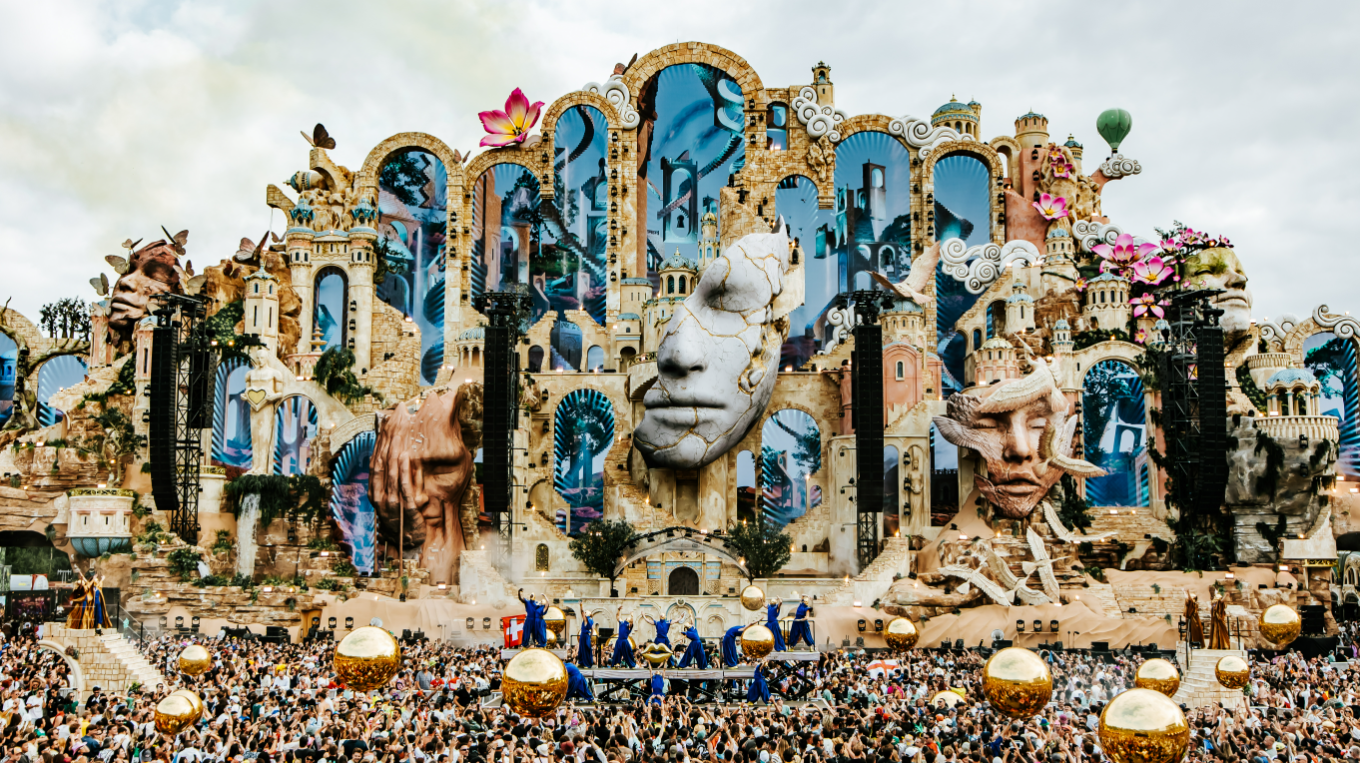
Consciencia centred its visual world on six faces representing primal emotions. The mainstage combined monumental architecture, water, lighting and a tightly scripted end show, giving the theme a physical form visible from across the amphitheatre. Tomorrowland has long treated stage design as narrative rather than decoration, and this year’s structure continued that approach. The risk is obvious: when the object becomes this large, music can feel like the soundtrack to the build. The best sets reverse that relationship and make the architecture respond to the DJ.
Across the two weekends, major names including Armin van Buuren, Martin Garrix, Calvin Harris, Hardwell and Dimitri Vegas occupied the mainstage. These bookings represent the festival’s broadest language: recognisable melodies, large gestures and transitions designed for a crowd extending far beyond the booth. Yet Tomorrowland’s identity has never depended on that stage alone.
Sixteen stages, sixteen different versions of the festival
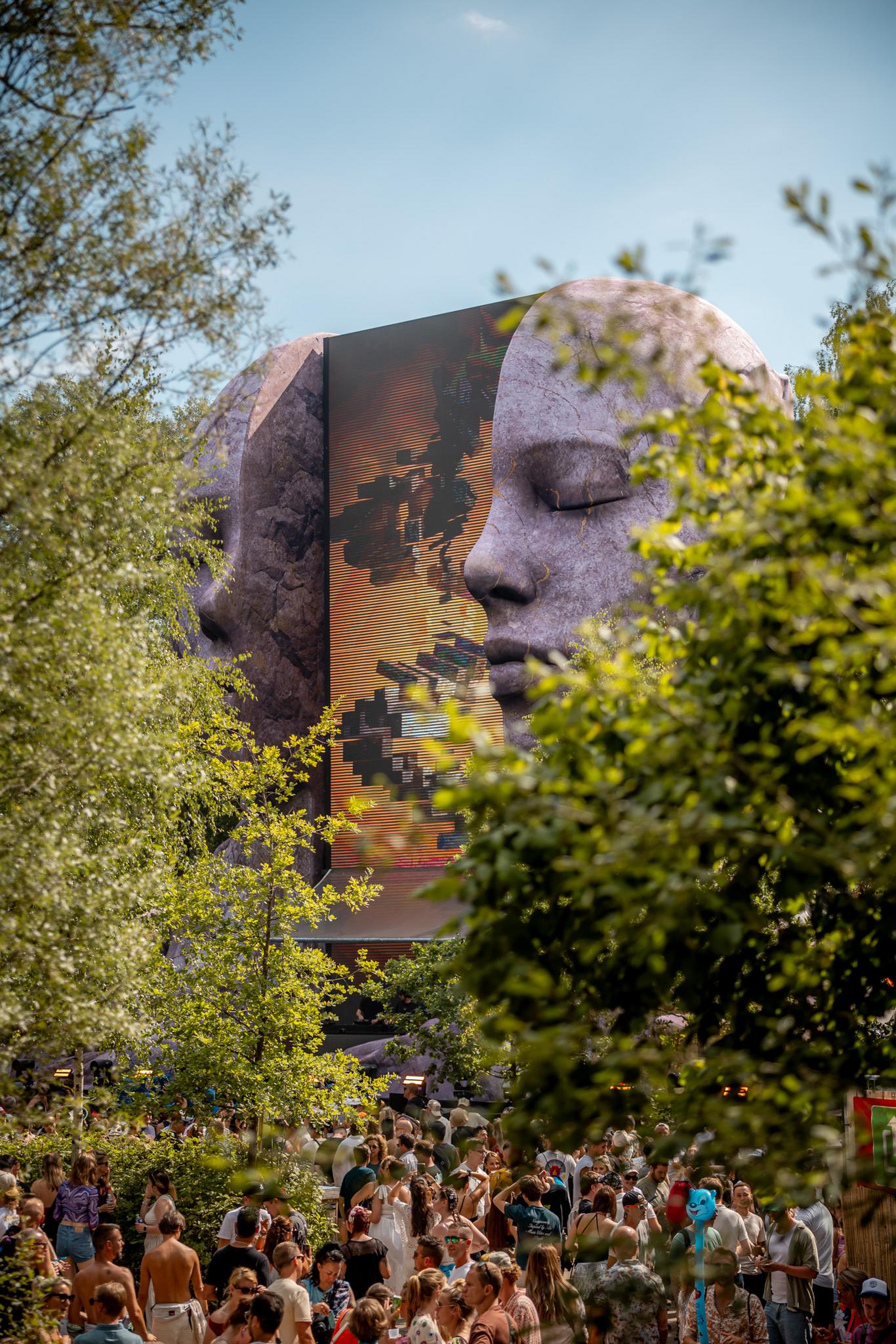
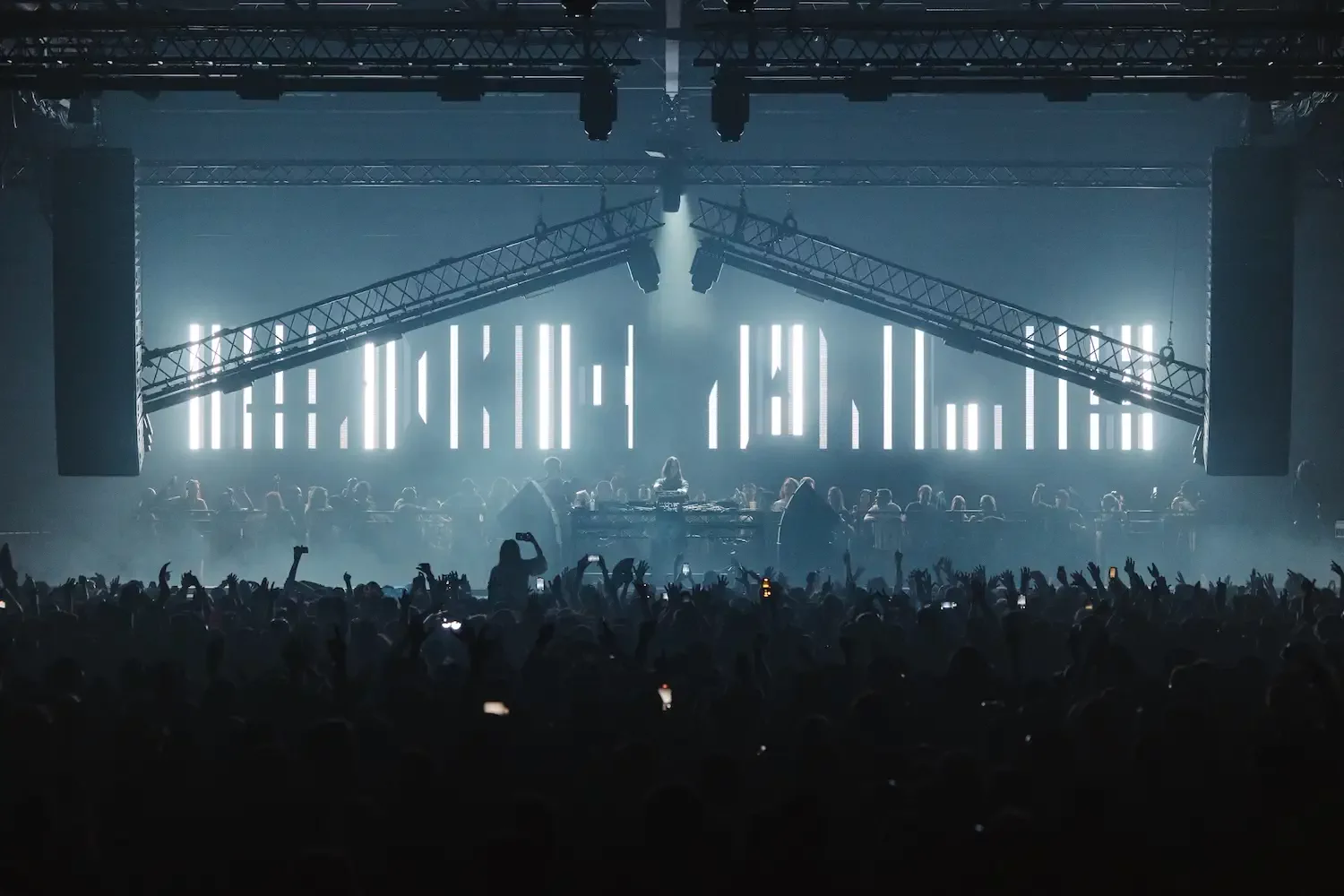
The 2026 edition spread across 16 stages. The Atmosphere tent remained a pressure chamber for techno and harder club forms, while The Great Library offered a more ornate setting for artists who might once have appeared on the mainstage. Crystal Garden, built over water, continued to function as one of the festival’s strongest spaces for house and melodic programming. Smaller rooms such as The Cave created the opposite experience: close, compressed and easy to miss if the weekend is planned only around headline sets.
This is where the festival’s real editorial tension sits. Tomorrowland sells one enormous image to the world, but visitors experience dozens of overlapping events. A polished livestream can make the weekend look musically uniform; walking between stages reveals a far messier and more interesting ecosystem. Techno, hard dance, trance, house, bass music and live crossover performances coexist, though not always with equal visibility.
The broadcast is now part of the venue
Tomorrowland’s global audience is not limited to those inside De Schorre. Official livestreams, short clips, artist uploads and the rapid release of an aftermovie turn the event into a media platform operating in real time. The camera positions, stage sightlines and set structures are increasingly shaped by that second audience. A drop is heard by the people in front of the speakers and immediately reframed for millions watching vertically on a phone.
That does not automatically make the experience less authentic. Club culture has always travelled through recordings, radio, tapes and stories from people who were there. What has changed is speed and control. The festival can now publish its own memory before attendees have fully processed the weekend. The official version arrives almost instantly, complete with its preferred emotions, landmarks and closing image.
What 400,000 people require behind the scenes
The numbers also point to an immense operational structure. Tomorrowland says more than 15,000 crew members worked across the event. Transport, sanitation, camping, artist movement, medical services, food, water and security must function at city scale. None of that is glamorous, but it determines whether the fantasy holds. A stage can be spectacular and still fail if the routes around it are unsafe or the crowd cannot recover between long periods of exposure to heat and sound.
The festival’s international reach adds another layer. Visitors arrive with different languages, club customs and expectations, then share a highly managed environment for several days. Tomorrowland’s achievement is partly its ability to make that complexity feel simple. The danger is that the universal language becomes overly smooth, leaving less room for local texture and friction.
Consciencia moves on from Belgium
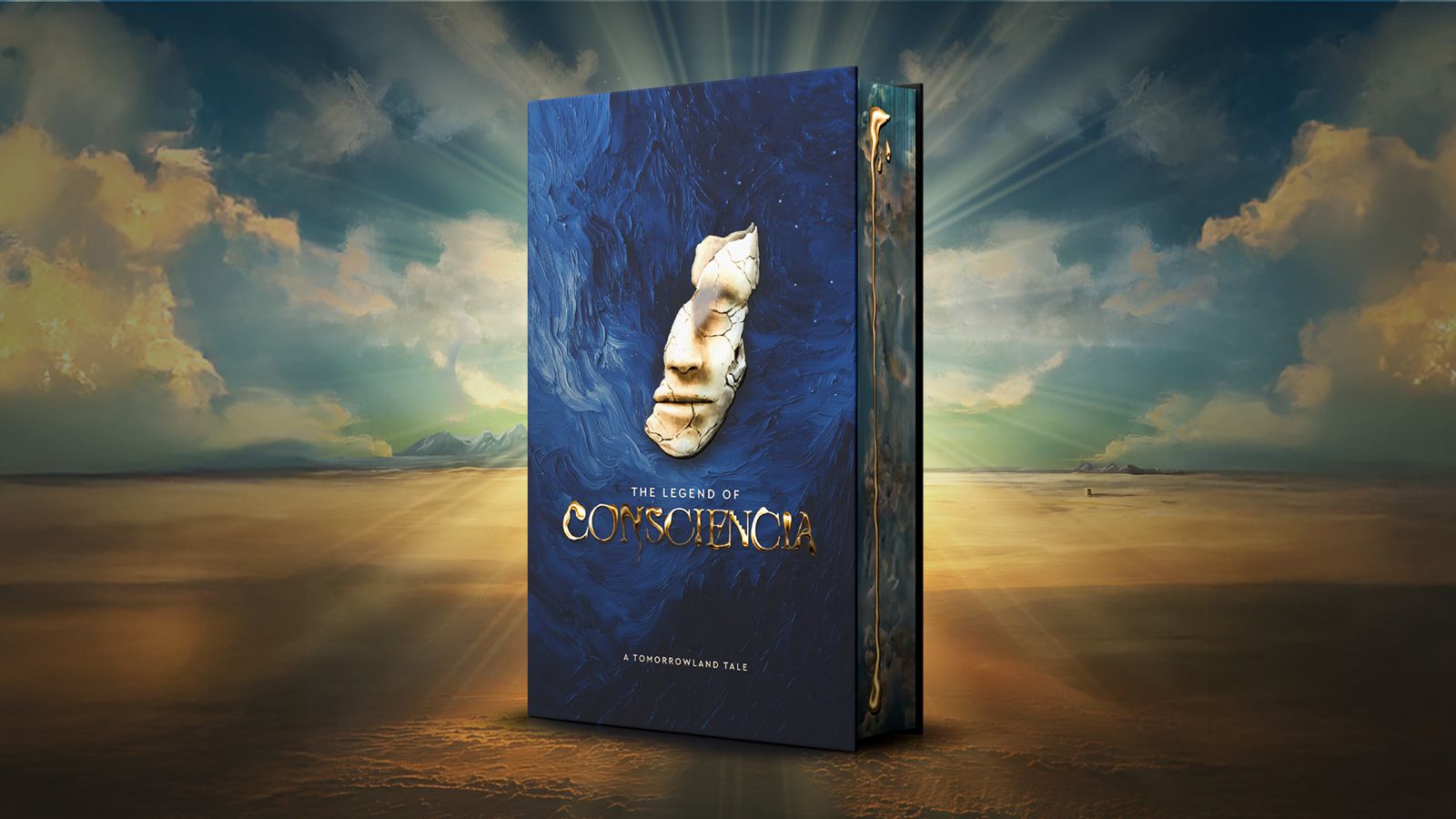
The organisers have made clear that the Consciencia story does not end in Boom. The theme will continue into future editions outside Belgium, including Tomorrowland’s expansion in Thailand. Carrying one visual narrative between continents can create continuity, but the music and culture around it should not be treated as portable scenery. A global festival brand has to listen to the place it enters, not simply reproduce a Belgian template under different weather.
For now, the gates in Boom are closed and the official images are already circulating. Tomorrowland 2026 delivered the scale people expected, but its most lasting moments will be smaller and less controllable: a set found by accident, a quiet route between stages, a track heard without knowing its name. Consciencia may be a global story, yet festivals still live or die through private memories that no aftermovie can fully organise.
THE CONVERSATION
Opinions, context and replies from the AT-DJ community.