
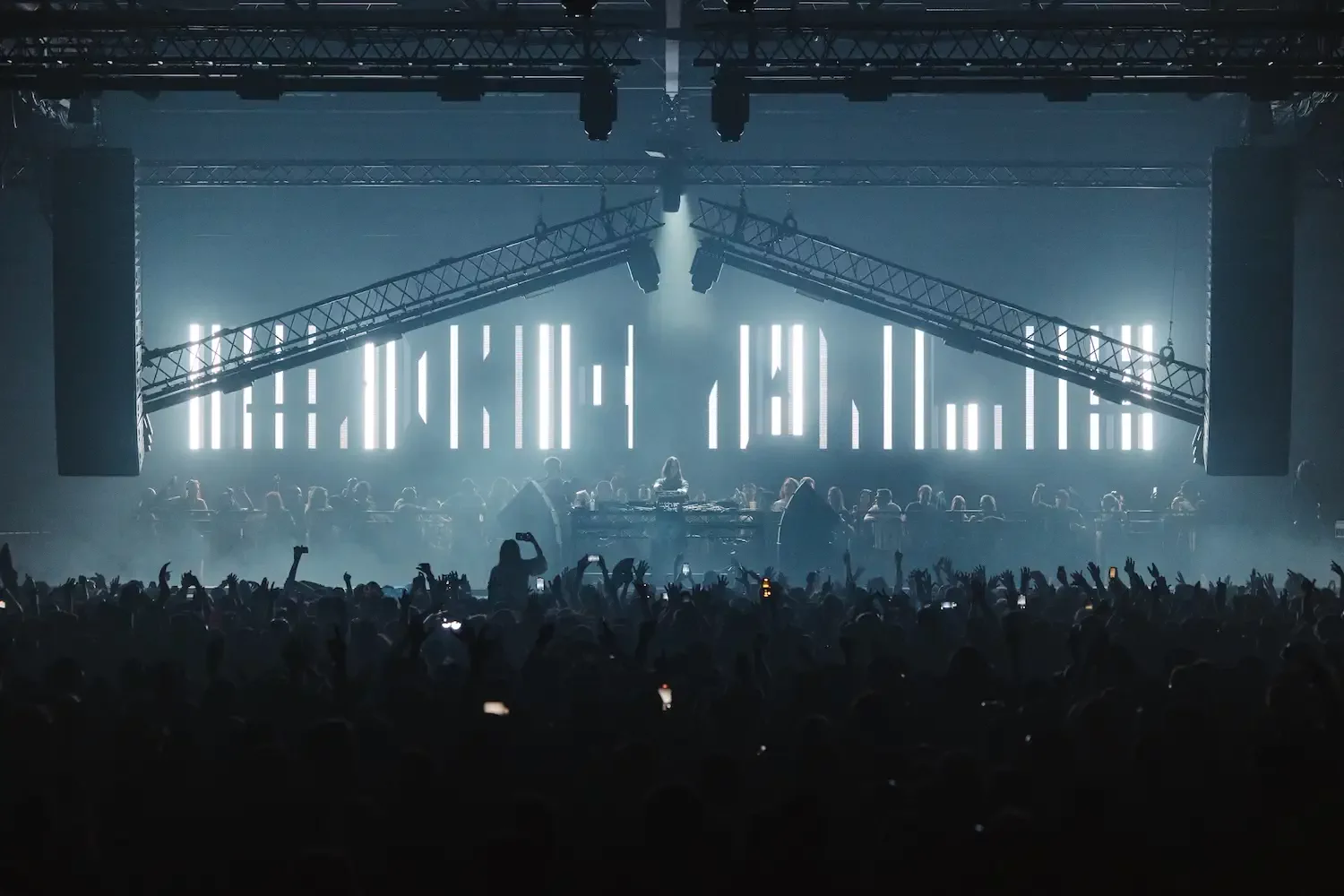
Independent club economics have never offered much room for error. Rent, staff, security, sound, insurance and licensing costs arrive before anybody buys a ticket. The pressure becomes sharper when the artist budget is built around one touring name whose fee must be recovered in a single night. Music Venue Trust has spent years documenting the financial strain on grassroots venues in the UK, and many of the same structural pressures are familiar across European club culture.
The headline fee is only the beginning
A touring DJ costs more than the number written on an offer. Flights, hotels, local transport, hospitality, agency commissions and technical requirements all sit around the booking. For an international artist, currency movement and tax treatment can add another layer of uncertainty.
Large festivals can spread those costs across tens of thousands of tickets. A 500-capacity club cannot. If the ticket price rises too far, the regular crowd starts disappearing. If the price stays accessible, the promoter may need an almost perfect sell-out simply to reach break-even.
Residents perform invisible economic work
The resident DJ is often described as the cheaper option, which misses the point. A good resident knows the room in ways a visitor cannot. They understand when people arrive, what the system does at different volumes, which records work before midnight and how to recover when a guest takes the energy somewhere unexpected.
That knowledge reduces programming risk. It also creates continuity between events. If audiences trust the resident, the club no longer has to sell every night exclusively through a large name at the top of the poster.
Headline culture can flatten local programming
When advance sales become the dominant measure of safety, promoters are pushed towards artists with proven ticket histories. The same names then circulate through competing venues and festivals, while local DJs struggle to move beyond warm-up slots. The result can be a market full of impressive lineups that somehow feel increasingly interchangeable.
Residents give a venue another route. They can connect emerging artists to established guests, test unfamiliar music and help build nights around labels or communities rather than celebrity alone. That makes the club an editor of culture instead of simply a room that rents international attention.
Big guests still matter
None of this makes headliners unnecessary. The right guest can transform a night, introduce new audiences and generate income that subsidises riskier programming elsewhere in the calendar. The problem begins when every weekend needs the same commercial mechanism to survive.
A healthier programme uses different scales: some nights centred on touring names, some on residents, some on local collectives and others on artists who are still growing. That diversity spreads financial risk and gives the venue a musical identity that cannot be copied by booking the same agency roster.
A residency is long-term infrastructure
The most important resident relationships are built over years. A DJ learns the room, the audience learns the DJ and both develop together. That process rarely generates an immediate headline, but it creates the kind of trust that lets a club programme beyond the obvious.
In a period of rising costs, that trust is economically useful. More importantly, it is cultural capital. Clubs become memorable because they have a point of view. Residents are one of the few ways to make that point of view audible every week rather than borrowing it for a few hours.




THE CONVERSATION
Opinions, context and replies from the AT-DJ community.