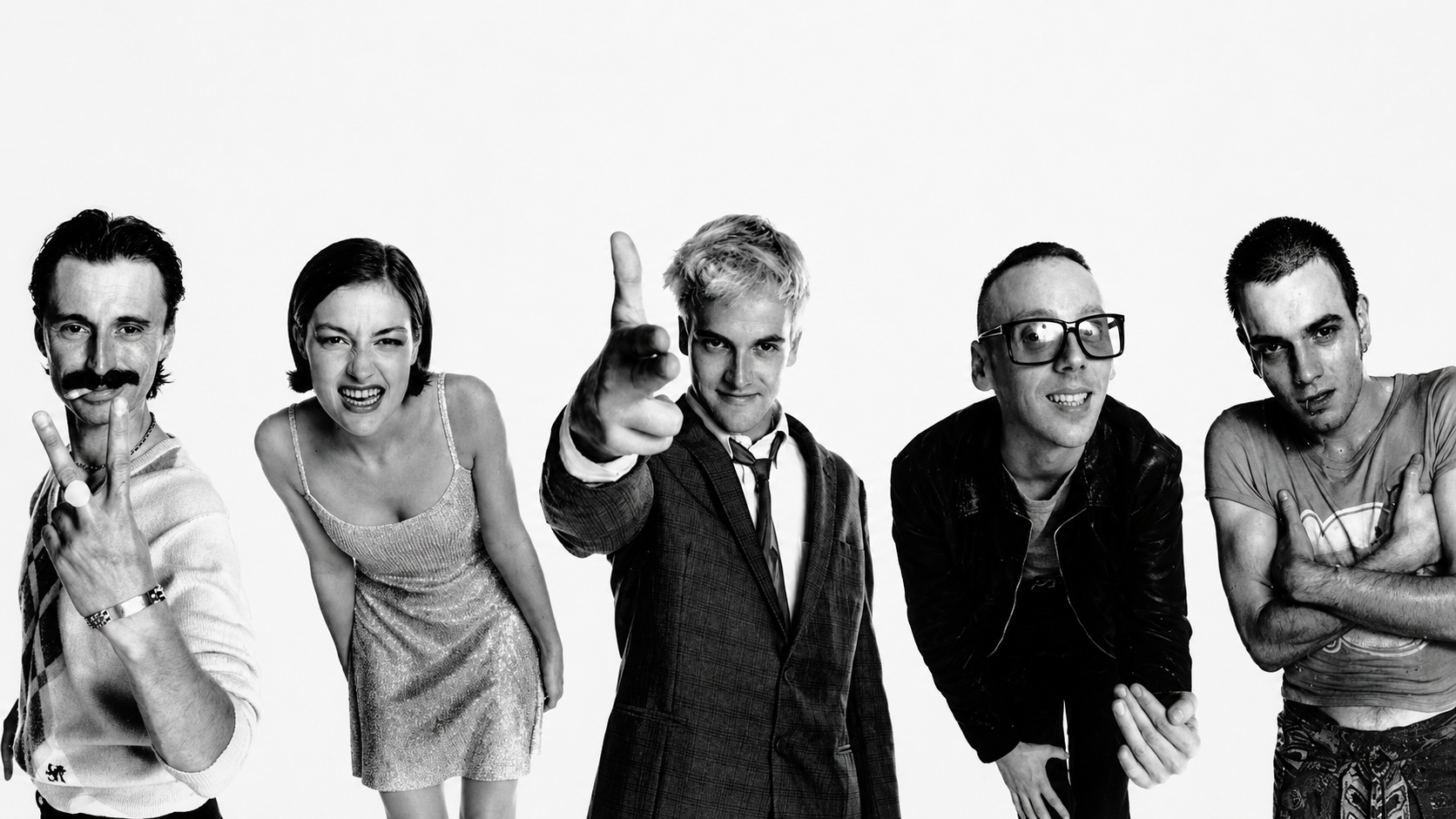
Trainspotting is often filed away as the great heroin film of the 1990s. That is true, but incomplete. Danny Boyle’s 1996 adaptation of Irvine Welsh’s novel is also one of the sharpest films ever made about a country changing its rhythm. It sits at the point where Thatcher-era damage, post-industrial boredom, acid house, Britpop, rave legislation and a newly mainstream electronic culture all collide. For anyone interested in club history, the film matters because its music is not decoration. It is the pulse of the world it depicts.
Sony’s current 30th-anniversary page still presents the film around the same core identity: Boyle directing, John Hodge adapting Welsh, and a cast built around Mark Renton and the friends orbiting his self-destruction. But three decades later, the most revealing way to revisit it is through sound. Trainspotting arrived when dance music in Britain was becoming impossible to keep at the edges of culture. Techno, house and rave had already transformed nightlife; now cinema was catching up.
From Thatcher’s Britain to the rave generation
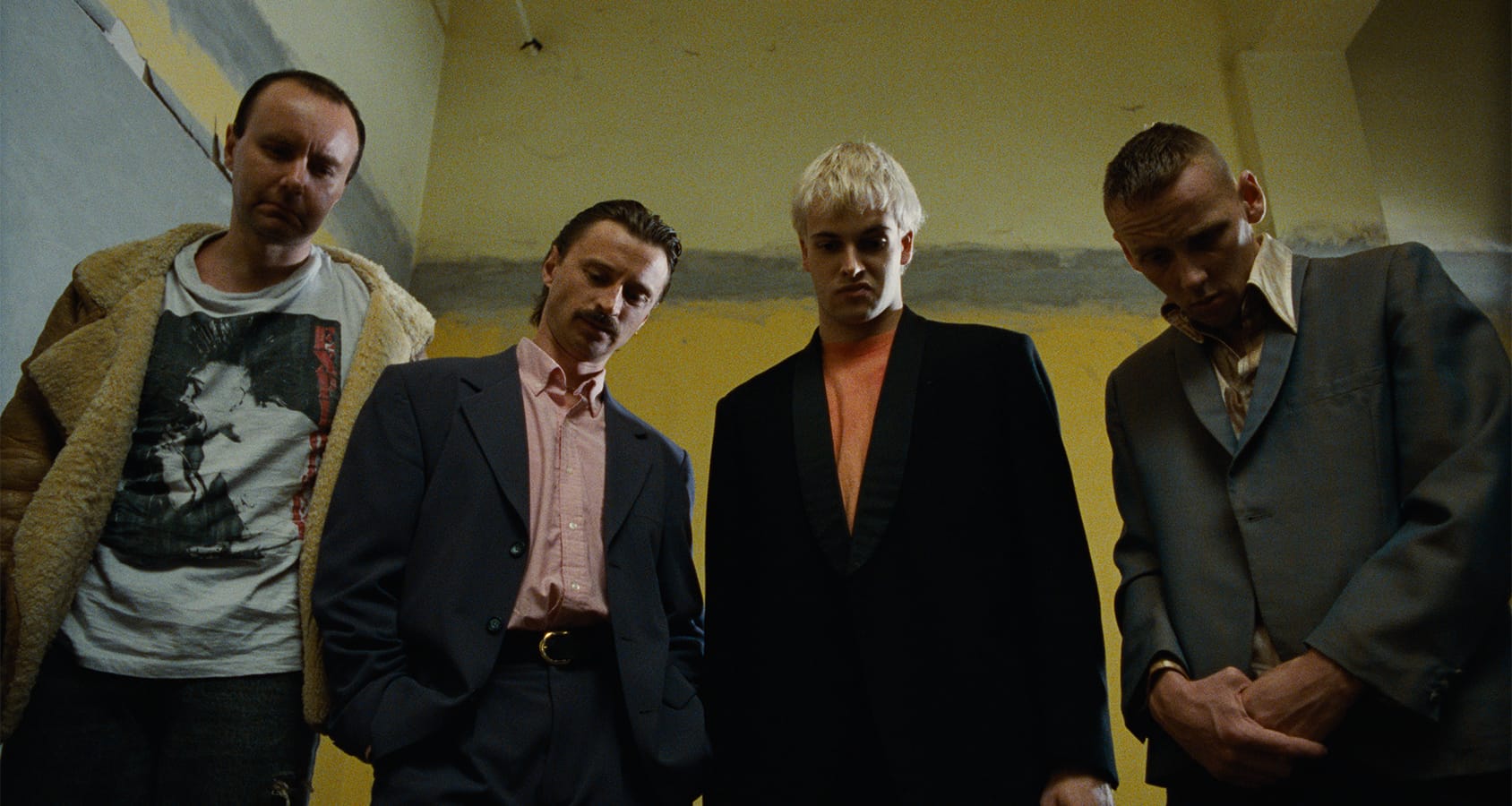
Welsh’s original material is rooted in a harsher social landscape than the film’s bright colours and speed can initially suggest. The BFI has described the novel’s Leith as a place marked by unemployment, substance abuse and the HIV epidemic. Boyle does not erase that background; he compresses it into a film that moves fast enough to feel almost euphoric while never letting the consequences disappear.
That tension mirrors British youth culture in the first half of the 1990s. Rave had created new forms of collective escape, and the state had reacted aggressively. Section 63 of the Criminal Justice and Public Order Act 1994 became infamous for describing rave music through a “succession of repetitive beats”. The phrase is bureaucratic, almost absurd, but historically important: it shows how seriously rave culture was being treated as a social and political problem.
“succession of repetitive beats”The wording used in Section 63 of the Criminal Justice and Public Order Act 1994.
Two years later, one of the biggest British films of the decade was using those same repetitive beats to define emotion, motion and modernity. The contrast is striking. Electronic music had moved from fields, warehouses and contested clubs into the centre of popular culture, but without losing all of its friction.
A soundtrack built like a DJ set
The famous soundtrack works because it refuses a neat genre identity. Iggy Pop, Lou Reed, New Order, Pulp, Blur, Primal Scream, Brian Eno, Bedrock and Underworld all coexist. That combination makes sense in retrospect because Trainspotting captures a period when British youth culture was far less compartmentalised than later nostalgia often suggests. Indie kids, ravers, art-school types and club crowds shared spaces, references and drugs; the soundtrack reflects that porousness.
The electronic selections are especially revealing. Bedrock’s For What You Dream Of, produced by John Digweed and Nick Muir, brings progressive house into the film not as background wallpaper but as part of the atmosphere of going out. Its long-form, hypnotic DNA belongs to a DJ culture built around patience, tension and extended transitions rather than three-minute pop structures.
Then there is Underworld’s Born Slippy .NUXX. The track’s later chart success — it reached number two in the UK — is inseparable from the film. Yet what makes the pairing powerful is not simply scale. The record sounds euphoric and wrecked at the same time. Its giant chords suggest release; Karl Hyde’s fragmented vocal drags the listener into intoxication, confusion and shame. That contradiction is exactly where Renton lives.
Why Born Slippy changed the language of film music
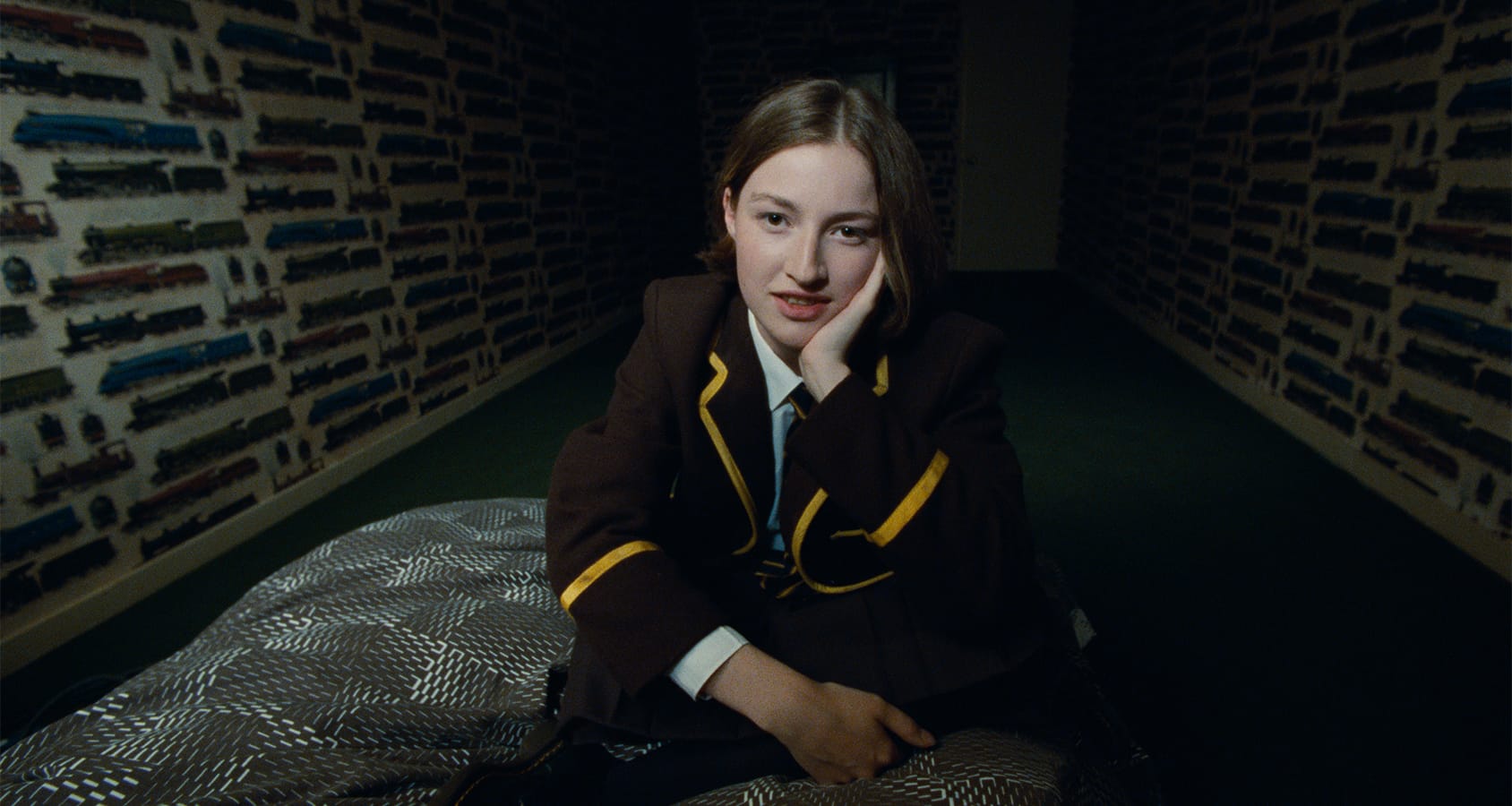
Before Trainspotting, dance records were often used in cinema to tell the audience that a scene was happening in a club. Boyle’s use of Born Slippy .NUXX does something more ambitious. The track carries narrative weight. It closes the film at the point where Renton is moving into a morally ambiguous version of freedom, and the music refuses to tell us whether that freedom is clean, dirty, triumphant or temporary.
That choice helped normalise a different role for electronic music on screen. A club record did not need to remain inside a club scene. It could function as score, character psychology and emotional climax. This became increasingly common in later British and European cinema, advertising and television, but Trainspotting remains one of the clearest early examples of the shift reaching a mass audience.
Editing like a comedown, design like a record sleeve
The film’s relationship with club culture goes beyond the soundtrack. Boyle and editor Masahiro Hirakubo cut with a physical sense of acceleration: sudden jumps, grotesque subjectivity, abrupt tonal changes and moments where time stretches or collapses. The structure behaves less like conventional prestige drama and more like the arc of a long night — anticipation, rush, repetition, fragmentation, comedown.
Its visual identity pushed in the same direction. The orange-and-white campaign, stark typography and cast portraits turned the characters into something close to a band lineup. The BFI notes that the marketing deliberately positioned them with the visual confidence of pop stars. That mattered because it connected British independent cinema to the graphic language of record sleeves, club flyers and music magazines rather than to the sober prestige codes usually associated with social realism.
The real influence: club culture without romanticising it
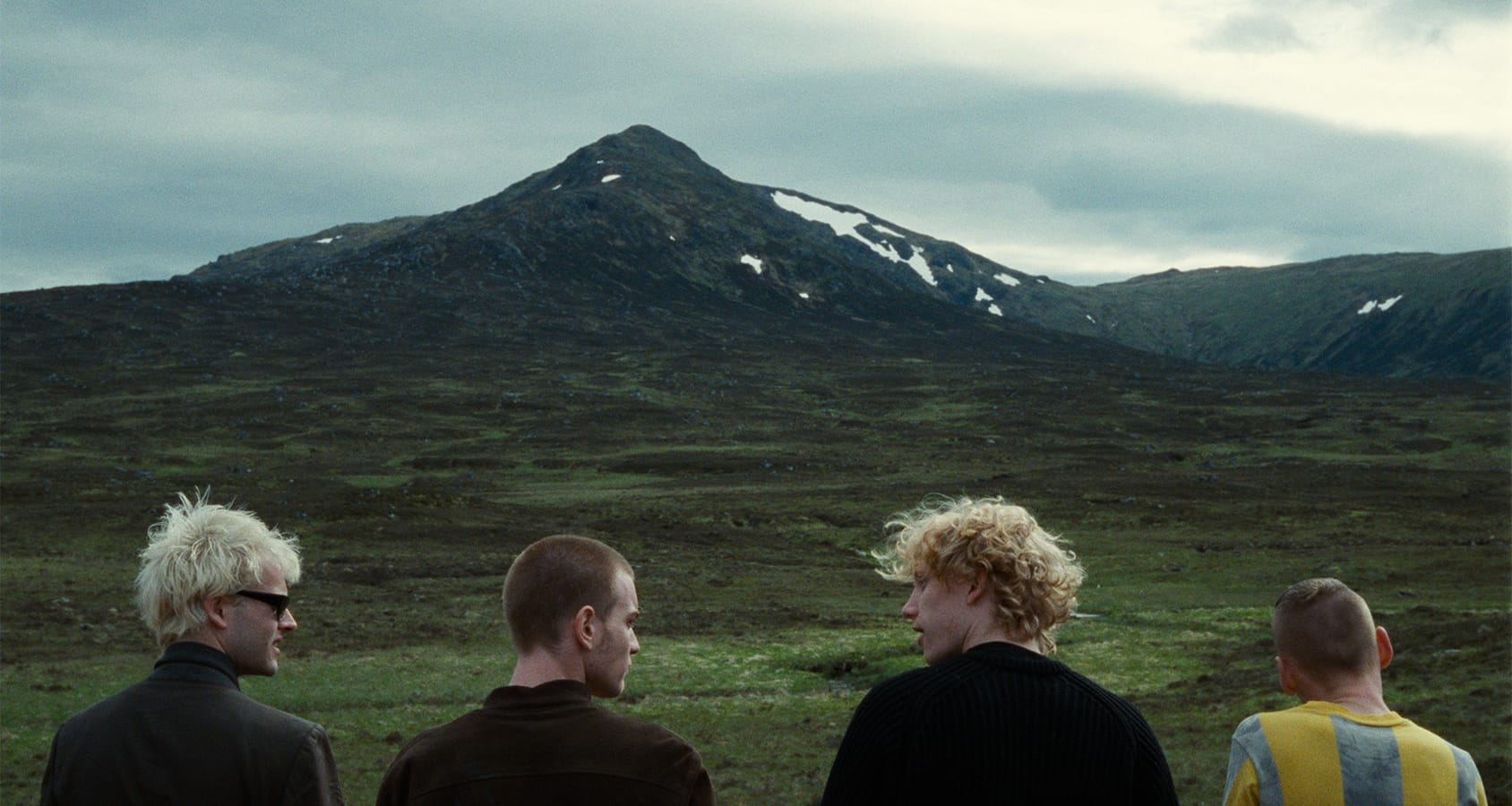
What keeps Trainspotting useful to club culture today is its refusal to make intoxication simple. The film understands the seduction of escape, but it does not confuse escape with liberation. Heroin is private, repetitive and enclosing; the wider culture around Renton is becoming more social, louder, faster and more dance-driven. Neither side is presented as innocent.
That ambiguity matters because rave history is often cleaned up in retrospect. The best memories become the story: freedom, unity, cheap warehouses, records that changed lives. Trainspotting remembers another part of the same decade — damage, addiction, unemployment, HIV, violence and people trying to construct temporary exits from a system that offered them very little. Its brilliance lies in letting exhilaration and degradation exist in the same frame.
The film also captures the moment when underground sound became mainstream shorthand. Once Born Slippy .NUXX was attached to Renton’s final walk into the future, it became more than an Underworld record. It became a cultural signal for the 1990s themselves. That is both a triumph and a warning: context mutates when club music leaves the club. A track about alcohol, disorientation and damage can become a mass euphoric anthem simply because millions of people first encountered it attached to a cinematic rush.
Why Trainspotting still belongs in electronic music history
The Criterion Collection’s current edition describes the film as kinetically cut to techno, rock and Britpop, which gets close to the point: Trainspotting belongs to electronic music history because it treated those worlds as one lived culture rather than separate genres. It understood that a generation could move from New Order to Underworld, from guitars to progressive house, from a bedroom to a club, without feeling any contradiction.
Three decades later, its influence is still audible every time a filmmaker trusts a dance track to carry a scene instead of merely decorate it. The film did not invent the relationship between cinema and club music, but it made that relationship visible to a huge audience at exactly the right moment. Britain was changing tempo, and Trainspotting caught the beat.



THE CONVERSATION
Opinions, context and replies from the AT-DJ community.