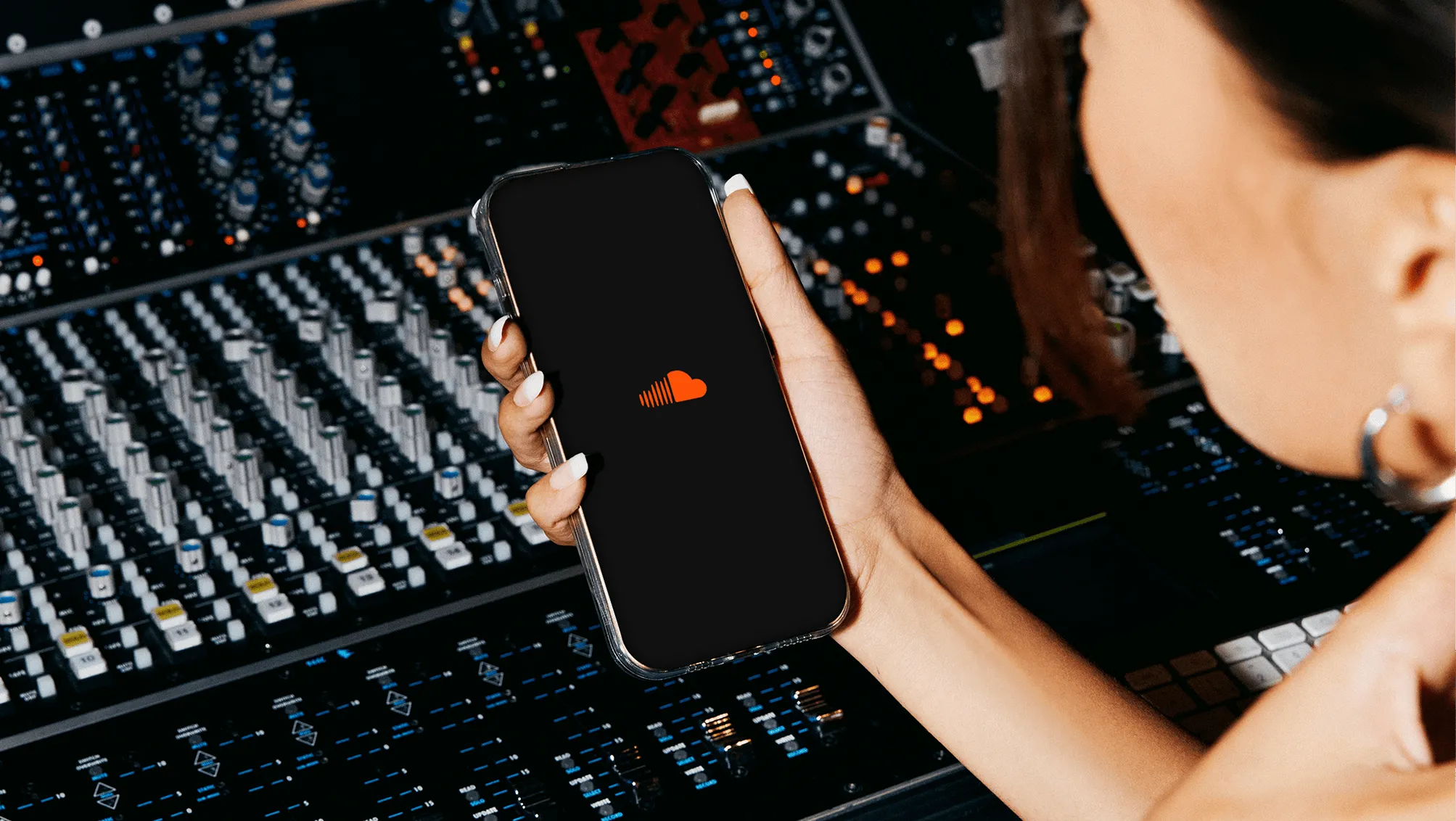
SoundCloud has added a direct purchasing layer to the platform, allowing music to be sold with zero commission taken by SoundCloud. The company announced the feature on 26 August, putting paid ownership back inside a service that most listeners still associate primarily with streaming, premieres, mixes and discovery.
For independent electronic artists, labels and self-releasing producers, that distinction matters. SoundCloud has long been good at generating attention around a track before it lands elsewhere: private links circulate between DJs, premieres pick up early momentum and scenes often form around reposts and comments before the music reaches a wider audience. A purchase option gives creators another way to capture some of that attention while the listener is already there.
A small button with a bigger economic question behind it
The headline feature is straightforward: SoundCloud says direct music purchases carry no platform commission. That immediately separates the model from marketplaces built around taking a percentage of each sale. It also lands at a time when independent artists are increasingly trying to spread income across several channels rather than relying on streaming alone.
The useful part is not that paid downloads are suddenly new. They are not. Electronic music has supported direct digital sales for decades through specialist stores, artist pages and label shops. What changes here is the location. SoundCloud sits unusually close to the discovery stage, especially for club music, edits, unreleased material and artists whose first audience often arrives through a DJ set, repost chain or scene-specific network.
Why electronic music is a useful test case
Club music is particularly well suited to this kind of direct conversion. A producer may upload a track weeks before wider distribution, share a version that never reaches streaming services, or build interest around an edit that lives mainly inside DJ culture. The distance between hearing something and wanting a copy can be very short. Removing an extra jump to another store does not guarantee a sale, but it removes friction at the exact point where enthusiasm is highest.
There is also a cultural angle. Buying individual tracks still has a practical function for DJs in a way that it does not for many casual listeners. A streaming play is enough for everyday listening; a DJ needs a file, a legal source and some confidence about what they are adding to a library. If SoundCloud can make that path cleaner, the feature may prove more significant for electronic music than for genres where ownership has largely moved to vinyl, merch or deluxe physical editions.
The zero-commission language will get most of the attention, although artists will still need to look closely at the full payment flow, transaction costs and whatever conditions apply to their own setup. SoundCloud's announcement changes the platform fee equation; it does not remove every cost involved in selling something online. That is an important distinction for anyone trying to work out what reaches the artist after a purchase.
SoundCloud keeps moving closer to the artist business
The launch fits a broader pattern in SoundCloud's recent product direction. The company has been building tools around artist subscriptions, fan recognition, early access and direct relationships between creators and listeners. In July it also announced the acquisition of Nina Protocol, a platform with a strong independent and underground music identity. Seen together, those moves suggest SoundCloud wants to be useful after discovery rather than handing the relationship off as soon as a listener becomes more committed.
That is an attractive proposition, but the real measure will be behaviour. Artists already juggle Bandcamp, Beatport, their own stores, distribution dashboards, streaming profiles, mailing lists and social platforms. Another sales route only earns a permanent place in that stack if it is simple enough to maintain and if listeners actually use it.
For labels and self-releasing artists, the key numbers will be conversion rate, transaction costs and how easily purchases can sit alongside an existing release workflow.
The next test is whether listeners buy where they discover
SoundCloud has an advantage that cannot be manufactured quickly: a large community already uses it to hunt for new music rather than simply replay familiar catalogues. That habit is especially visible around electronic music, where private links, works in progress, bootlegs, DJ tools and long-form sets still circulate heavily on the platform.
Direct purchases give that behaviour a commercial endpoint. Whether it becomes meaningful income will depend on adoption from both sides, and on how prominently the option appears around the music people actually want to own. The feature is live as a strategic statement already: SoundCloud is making a clearer case that discovery, fandom and payment can happen in the same place.


THE CONVERSATION
Opinions, context and replies from the AT-DJ community.